
Wilson County Probate Court Records Lookup
Wilson County Probate Court Records guide estate research for Lebanon, Mount Juliet, Watertown, and the rest of the county. A search here works best when you separate current probate handling from older archival series because Wilson County Court and Chancery Court handle the case flow, while the archives preserves much of the long paper trail. Use this page to track where Wilson County probate books, wills, bonds, settlements, and related estate files begin, how county routing works for city residents, and which Tennessee sources help narrow the right local request.
Wilson County Probate Court Records Office
The Wilson County FamilySearch guide places the county's creation on October 26, 1799, from Sumner County and points to probate material that starts almost immediately after formation. That early start matters because Wilson County Probate Court Records are not limited to one record set. The county has wills and inventories in early books, later will indexes, bonds and letters, guardian records, and long-running settlement series that can each hold a different piece of the estate story.
Lebanon is the county seat, and probate work runs through Wilson County Court and Chancery Court rather than through a city hall or municipal clerk. That county structure stays the same even when the decedent lived in Mount Juliet or Watertown. The city may help you identify a residence, cemetery, church, or newspaper lead, but the estate file itself remains a county probate matter. Knowing that keeps Wilson County searches from drifting toward the wrong office.
County information also gives a clear archival contact point. Wilson County Archives was established in 1995 and is listed at 111 South College Street, Lebanon, TN 37087, with the phone number (615) 443-1993. The county says its collections include probate deeds from 1843 to 1947, administrators and executors bonds from 1814 to 1964, insolvent cases from 1870 to 1964, guardian settlements from 1836 to 1958, will books and original wills from 1802 to 1964, and county court minutes from 1803 to 1964. Those date spans make the archives central to older Wilson County Probate Court Records work.
| County Seat | Lebanon |
|---|---|
| Probate Handling | Wilson County Court and Chancery Court |
| Archives | 111 South College Street Lebanon, TN 37087 (615) 443-1993 |
| Key Holdings | Will books and original wills, bonds, guardian settlements, insolvent cases, probate deeds, county court minutes |
Search Wilson County Probate Court Records
A good search starts with the year and the type of paper you want. Wilson County Probate Court Records can surface as a will book entry, an original will, an administrator bond, letters, a guardian settlement, an insolvent case, or a county court minute entry. The more you match your request to the actual series, the faster the county can tell you whether the material is held in current court files, in archival storage, or on microfilm.
The date ranges in the FamilySearch guide help frame that request. It points to wills and inventories for 1803 to 1819, administrators' and executors' settlements for 1839 to 1844 and 1850 to 1965, administrator bonds and letters for 1838 to 1845 and 1862 to 1965, guardian bonds and letters for 1858 to 1965, guardian settlements for 1836 to 1965, wills and an index for 1803 to 1917, and broader wills and inventories for 1802 to 1965. Those overlapping ranges are normal in Tennessee probate work because one estate can leave traces in both books and loose papers.
Details that usually make Wilson County Probate Court Records easier to locate include:
- Full name of the decedent and any spelling variant
- Approximate year of death or the likely probate filing year
- The record group needed, such as a will, bond, letters, inventory, settlement, or insolvent case
- The city connection, such as Lebanon, Mount Juliet, or Watertown, used only to place the estate in the county
- Any known book citation, file number, or family member name tied to the estate
The Tennessee Probate Records overview at FamilySearch and Ancestry's Tennessee probate collection can help with indexes and statewide context before you contact the county. They work best as locator tools. The official Wilson County probate record still comes from the county office or archive that holds the file.
Note: City names help narrow the person, but Wilson County keeps the probate record path at the county level.
Historic Wilson County Probate Court Records
The TSLA Wilson County microfilm inventory confirms that older probate material survives in several forms, including bonds, insolvent estates, settlements, and wills and inventories. That matters because older Wilson County Probate Court Records are not always one neat folder. A will may be copied in a bound volume, tied to a later settlement book, and supported by loose bond papers or county minute entries.
The same microfilm listing also notes municipal records for Lebanon, Mt. Juliet, and Watertown. That is useful background, but it does not change probate venue. Municipal records can help with local context. They do not replace the county probate file. If the estate was opened for a Wilson County resident, the probate trail still runs through county handling in Lebanon, with older records often preserved through archives or state-supported microfilm access.
The county's own archival summary lines up well with the FamilySearch ranges. Wilson County Archives says it holds original wills through 1964, guardian settlements beginning in 1836, and administrators and executors bonds reaching back to 1814. When several sources overlap that closely, it strengthens the case for using Wilson County Archives as the main research hub for historical Wilson County Probate Court Records, especially when you need proof beyond a bare name index.
Wilson County Estate Files
Wilson County Probate Court Records can contain much more than a final order. Depending on the year, one estate may leave behind a petition to open probate, an original will, probate minutes, letters testamentary or letters of administration, bond papers, an inventory, creditor material, a settlement, and closing entries. Guardianship matters can create a parallel paper trail with bonds, letters, and settlements that do not always sit in the same book as the estate itself.
The county archives holdings make those categories concrete. Probate deeds from 1843 to 1947 can connect the probate file to land transfers. Insolvent cases from 1870 to 1964 can show how debts were handled. County court minutes from 1803 to 1964 can fill gaps when a loose estate packet is incomplete. If you know which document group you need, Wilson County Probate Court Records become much easier to search and request.
Common record groups found in Wilson County probate research include:
- Will books, original wills, and will indexes
- Administrator and executor bonds and letters
- Guardian bonds, letters, and guardian settlements
- Inventories, settlements, and insolvent estate papers
- County court minutes and probate-related deed references
Wilson County Probate Court Records Law
Local files are county records, but the paper trail inside them follows Tennessee probate law. Title 30 frames estate administration, Title 31 helps explain inheritance when heirs take by descent and distribution, and Title 32 supplies the core will rules that shape how a testament is proved and carried out. Reading Wilson County Probate Court Records with those titles in mind makes the sequence of filings easier to understand.
Tenn. Code Ann. §§ 30-2-301 and 30-2-302 help explain why an estate file may include inventories, account entries, or clerk notations after a personal representative qualifies. Tenn. Code Ann. §§ 30-2-306 and 30-2-307 help explain why creditor claims, objections, and deadline-driven notices can become some of the most important papers in the file. Those sections do not replace the county record. They help you see why a Wilson County file contains the specific documents it does.
The Wilson County government site is the local source behind the archival holdings shown below.
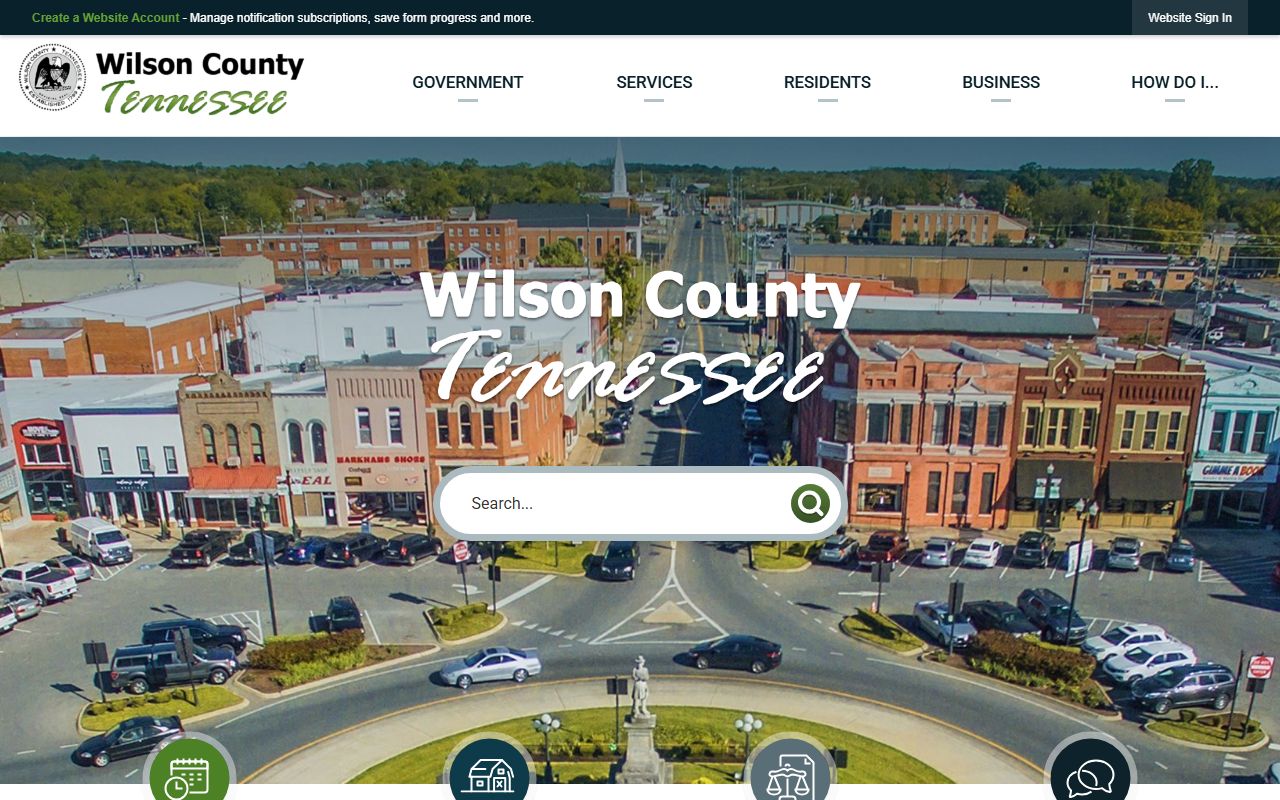
That county source is most useful when paired with the Tennessee Courts portal, which helps clarify how county court and chancery court structures fit into the broader state system before you request Wilson County Probate Court Records.
Note: Statutes explain the filing pattern, but the Wilson County file remains the primary proof of what the court received.
Get Wilson County Probate Court Records
If you need copies, decide first whether the matter is current or historical. Older Wilson County Probate Court Records are often best approached through the archives because the county's listed holdings are detailed and run deep into the nineteenth century. A recent estate may require the clerk tied to the court where the case is filed. Either way, the most effective request is narrow and uses the county's own record language.
State resources can help when the local description is not enough. The Tennessee State Library and Archives supports county microfilm access and broader records guidance across the state. That makes it a useful backup when you need to confirm a series title, a date range, or whether a probate book was copied to film. It does not replace the Wilson County office that holds the official local record, but it can help you ask for the right thing.
When writing or calling, give the decedent's name, the rough year, and the record type you want. Ask for the will book entry, the original will, the bond and letters record, the guardian settlement, or the insolvent estate papers rather than asking for every record under a surname. Wilson County Probate Court Records are easier to retrieve when the request matches the way the county kept them.
Lebanon Probate Routes
Lebanon anchors nearly every county probate search. It is the county seat, the location of Wilson County Archives, and the city most closely tied to county court activity. When a source gives a Wilson County will book, an estate settlement, or county court minutes, Lebanon is usually the place where that record was created, stored, or later preserved.
That does not mean every probate matter belongs to a Lebanon resident. It means county probate administration is centered there. If you are tracing a family that lived elsewhere in the county, Lebanon still remains the main route for the official probate file and the best starting point for Wilson County Probate Court Records research.
Mount Juliet Probate Routes
Mount Juliet is one of the county's most important population centers, but it is not a separate probate jurisdiction. A decedent who lived in Mount Juliet would still move through county probate handling in Wilson County Court or Chancery Court, with older books and files likely tied back to Lebanon archival holdings. That county-first rule matters when a family knows the city but not the office.
The same approach works for Watertown and smaller communities across the county. Use the city to confirm identity and residence, then shift back to Wilson County Probate Court Records for the official estate trail. That keeps the search tied to the right court record series instead of unrelated city material.
Cities in Wilson County
Wilson County Probate Court Records still route through the county seat and county probate system, but these city pages give you location-specific context for residents who begin the search from different communities inside the county.
Use these city pages when you want local access notes that still point back to Wilson County probate records.
Nearby County Searches
Wilson County borders other Tennessee counties that can matter when an estate was filed near a county line, involved land in more than one county, or belongs in a neighboring probate venue instead. Use these adjoining county pages when the record trail moves outside Wilson County.