
Sullivan County Probate Court Records Guide
Sullivan County Probate Court Records connect wills, estate files, inventories, bonds, and court minutes to a county process centered in Blountville. If you need to search an older estate, the best path is usually a focused county request tied to the right record series and year span rather than a broad online search. This page explains how Sullivan County probate handling works, what date ranges are documented in the research, and how Tennessee statewide tools can support a county-first search for records tied to Kingsport, Bristol, and the rest of the county.
Sullivan County Probate Court Records Quick Facts
Sullivan County Probate Court Records Office
Sullivan County was created in 1779 from Washington County, North Carolina, and its probate history is older than Tennessee statehood. The FamilySearch guide for Sullivan County identifies probate handling through Sullivan County Court and points researchers toward wills, bonds and letters, inventories, settlements, and related court books. That county court framing matters because Sullivan County Probate Court Records are county-level records even when the family story starts with a city address instead of the courthouse town.
Blountville is the county seat, so current routing still centers there. The Sullivan County government site is the practical county support point for confirming local offices, courthouse direction, and other current contact details tied to Blountville. If a decedent lived in Kingsport or Bristol, the probate file does not move to a city office. The search still comes back to county probate handling in Blountville.
| County Seat | Blountville |
|---|---|
| Probate Handling | Sullivan County Court |
| Historic Starting Point | Sullivan County created in 1779 from Washington County, North Carolina |
| Best Search Frame | County court books, probate series, and statewide research aids |
The county office question is simple, but the record trail is not. Sullivan County Probate Court Records can exist as bound books, loose estate papers, microfilm copies, and statewide research references. That means a good request usually names the document type and date range first, then asks the county office or archive support source for the best access path.
Search Sullivan County Probate Court Records
A strong Sullivan County search begins with the person, the approximate death year, and the specific probate record you need. This county has separate date ranges for wills, will books, inventories, settlements, bonds and letters, and court minutes. When you match the request to the series, staff and archives tools have a much better chance of finding the right entry quickly. A broad request for all papers on one surname is less useful than a request that names the likely series.
The most helpful details to gather before you ask for Sullivan County Probate Court Records include:
- The decedent's full name and any common spelling variation
- The likely year of death or estate opening
- The record type needed, such as a will, inventory, settlement, bond, or letters
- A place clue such as Blountville, Kingsport, or Bristol, used only to confirm county venue
- Whether you are chasing a historic book entry or a more modern county court file
That city clue should stay secondary. Kingsport and Bristol matter for identification, but probate venue stays with the county. Sullivan County Probate Court Records are still county records, so the city name helps place the family rather than change the office that handled the estate.
Note: A narrow request with a series name and year range is usually more effective than asking only for a surname.
Sullivan County Probate Court Records Series
The research for Sullivan County is detailed enough to support a targeted search. FamilySearch identifies Will Book No. 1 for 1830 to 1870 and wills for 1838 to 1915. It also notes inventories in estates of deceased persons for 1864 to 1902, court minutes for 1861 to 1893, guardians', executors', and administrators' bonds and letters for 1875 to 1929, settlements of accounts for 1878 to 1901, and accounts of insolvent estates for 1879 to 1942. Those ranges help you decide whether a missing estate should appear as a will, an administration file, or a later accounting record.
The Tennessee State Library and Archives microfilm listing for Sullivan County adds another layer. It shows how county probate material was preserved on microfilm and supports the idea that Sullivan County Probate Court Records should be approached as a set of named series, not as one undifferentiated file room. When a county office cannot answer a broad request right away, a TSLA series description can help you restate the search in the same terms used by archivists and clerks.
Useful Sullivan County record groups from the research include:
- Will books for early probate entries
- Standalone wills filed across the late nineteenth and early twentieth centuries
- Inventories that describe estate property
- Bonds and letters tied to guardians, executors, and administrators
- Settlements of accounts that show the estate closing process
- Accounts of insolvent estates when debts exceeded assets
These ranges also tell you what not to expect. If a death falls well outside the documented series span, you may need current court routing, a neighboring county check, or a state-level aid to bridge the gap. If it falls inside one of those ranges, the request should name that series directly.
Sullivan Probate Research Tools
The Tennessee courts official portal is the best statewide starting point when you need current court structure before contacting Blountville about Sullivan County Probate Court Records.
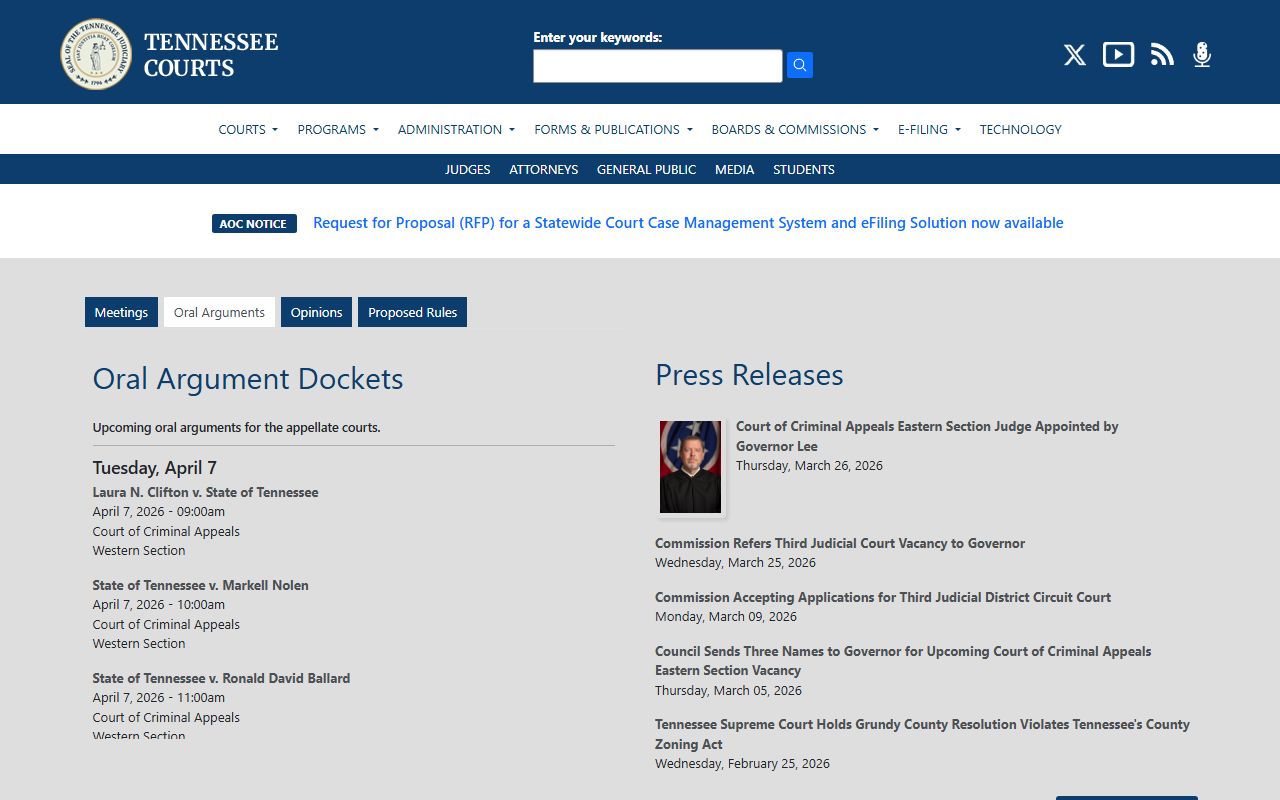
That statewide court view does not replace the county record, but it helps you understand how Tennessee court administration fits around local probate handling.
Other statewide tools help narrow a Sullivan County search before you contact the county. The Tennessee Probate Records overview at FamilySearch explains how probate books and loose estate papers were commonly organized across the state. Ancestry's Tennessee wills and probate collection can also be useful for finding an index entry, book citation, or date clue that points back to the county record. When you need archival context or preservation support beyond the county level, the Tennessee State Library and Archives is the main state resource to keep in view.
These tools are best used as support. Sullivan County Probate Court Records remain county records first, even when a statewide website helps identify the right volume or date. The search is strongest when a statewide citation is turned into a county-specific request for a will book page, an inventory, or a settlement entry.
Sullivan Probate Law Guide
Sullivan County Probate Court Records reflect Tennessee probate law even though the file itself is local. Title 30 governs estate administration, Title 31 helps explain descent and distribution when there is no will, and Title 32 addresses wills and their probate. Those statewide titles give useful context when a Sullivan County file contains more than one type of paper.
The documented Sullivan County series line up with those rules. Tenn. Code Ann. §§ 30-2-301 and 30-2-302 help explain why inventories appear in estate administration and why an inventory can become one of the most useful surviving probate records. That matters here because inventories in estates of deceased persons are documented from 1864 to 1902. If you find an inventory in Sullivan County Probate Court Records, it is not just family background. It is part of the formal administration trail.
Creditor practice also leaves a trace. Tenn. Code Ann. §§ 30-2-306 and 30-2-307 help explain why some estate papers include notice to creditors, filed claims, objections, and later rulings on whether a claim was timely made. In Sullivan County, those details may show up in settlements, insolvency records, or related county court entries. The statutes explain the process. The county books and files show how that process played out in a real probate matter.
Note: Statutes explain why papers exist in a probate file, but the county record remains the best proof of what was actually filed.
Get Sullivan County Probate Court Records
If you need copies or confirmation, start by deciding whether the request is historical or current. Older Sullivan County Probate Court Records are more likely to be found through county-held books, microfilm references, or archive support language that tracks the historic record series. More recent matters may depend on present-day county court routing in Blountville. Either way, the request should be narrow and should name the estate type, the date span, and the paper you want.
A useful request often asks for one thing at a time: a will book page, a set of letters, an inventory, a settlement, or an insolvency entry. That approach matches the way Sullivan County Probate Court Records were described in the research and preserved in TSLA finding aids. It also reduces the chance that a clerk or staff member has to guess which probate series you mean.
If a first request comes back with no result, do not assume the probate record never existed. Reframe the search around the series dates. A person who died in the late 1800s may appear in a will record, an inventory, a bond and letters record, or a settlement even if one of those series is missing. County probate work is often solved by shifting from a name-only request to a series-based request.
Sullivan County Probate Court Records in Blountville
Blountville anchors the county search. It is the county seat, the place associated with Sullivan County Court, and the location that keeps a probate request tied to the right county even when the family story points to a larger city. When you see Sullivan County Probate Court Records described in books, microfilm lists, or statewide research tools, the county seat is the place to keep in mind.
This is especially important in Northeast Tennessee, where city names can mislead researchers. A decedent may have lived near a city boundary, owned land in more than one place, or been remembered by a mailing address rather than the probate venue. Blountville keeps the search grounded in the county that handled the estate.
Kingsport and Bristol Probate Routes
Kingsport and Bristol are the city names many people know first, but those names should be used as route markers rather than as probate offices. If the estate belonged in Sullivan County, the probate handling still routes through the county process in Blountville. That is true whether the search begins with a Kingsport obituary, a Bristol family memory, or a deed reference that suggests a Sullivan County connection.
Those city names still help. They can separate people with similar names and can point to the right county when you compare residences, cemeteries, and family ties. They just do not replace the county-level probate record. For Bristol in particular, confirm both the county and the Tennessee side of the line before ordering a probate record, because a city label alone can send a search in the wrong direction.
Cities in Sullivan County
Sullivan County Probate Court Records still route through the county seat and county probate system, but these city pages give you location-specific context for residents who begin the search from different communities inside the county.
Use these city pages when you want local access notes that still point back to Sullivan County probate records.
Nearby County Searches
Sullivan County borders other Tennessee counties that can matter when an estate was filed near a county line, involved land in more than one county, or belongs in a neighboring probate venue instead. Use these adjoining county pages when the record trail moves outside Sullivan County.