
Search Sumner County Probate Court Records
Sumner County Probate Court Records help families, heirs, and local historians trace wills, estate packets, bond books, and probate volumes tied to Gallatin, Hendersonville, and the rest of the county. Probate work in Sumner County runs through county-level courts rather than city offices, so a solid search begins by separating current court files from older archival holdings. Use this page to see where Sumner County probate material starts, which offices control it now, and how statewide Tennessee sources can support a county search without replacing the official local record.
Sumner County Probate Court Records Office
Sumner County was created on November 18, 1786, from Davidson County, and the probate trail here starts almost as early as the county itself. The FamilySearch guide for Sumner County points researchers to probate records beginning in 1787, with the County Clerk holding marriage and probate records and the Register of Deeds holding land records from 1787. That history matters because Sumner County Probate Court Records often overlap with deed and family research, but they are not stored in just one place or one format.
Gallatin is the county seat, and county probate handling routes through Sumner County Court and Chancery Court rather than through municipal offices. For basic county contact points, the FamilySearch county guide lists the courthouse at 355 North Belvedere Drive, Gallatin, TN 37066, and gives the County Clerk phone as 615-452-4063. More recent county guidance adds an important routing rule: Sumner County's public records request page says court records must be requested from the clerk of the court where the case is filed. That means a probate search should start with the proper court clerk, not the countywide public records coordinator.
The same county guidance also draws a clear line between county and city records. If a person lived in Hendersonville, Gallatin, Portland, or White House, the estate still belongs to the county probate system if it was opened there. Municipal records for those cities are requested from the city itself, but Sumner County Probate Court Records remain county court records. That county-first structure is the key to avoiding a dead end when a family only knows the decedent's city and not the court that handled the estate.
| County Seat | Gallatin |
|---|---|
| Probate Handling | Sumner County Court and Chancery Court |
| County Clerk | 355 North Belvedere Drive Gallatin, TN 37066 615-452-4063 |
| Archives | 365 North Belvedere Drive Gallatin, TN 37066 615-452-0037 |
Search Sumner County Probate Court Records
A strong search starts with the year and the type of record. Sumner County Probate Court Records can appear as will books, loose estate packets, bonds and letters, settlements, or later court files. If the estate is recent, begin with the clerk for the court where the case was filed. If the matter is historical, the archives may be the faster route because the county archives says it holds probate records prior to 2004 and preserves loose records that span the county's entire existence. That split is important. It tells you whether to ask for a live court file or a preserved county record series.
FamilySearch gives useful date anchors for older work in Sumner County. The county guide points to will book abstracts for 1779 to 1823 and 1823 to 1842, will books running from 1789 to 1967, and administrator's, executor's, and guardian bonds, letters, and settlements from 1796 to 1967. Those ranges let you frame a request in the same terms the record was kept. Instead of asking only for "anything on this family," ask for the will book entry, the bonds and letters series, or the estate packet tied to the decedent and year.
Details that usually make a Sumner County Probate Court Records request more precise include:
- Decedent's full name and any likely spelling variant
- Approximate year of death or year the estate opened
- The document type needed, such as a will, letters, bond, inventory, or settlement
- The city connection, such as Gallatin or Hendersonville, used only to help place the estate in the right county
- Whether the request is for a recent court file or an older archival series
Statewide tools can help before you call. The Tennessee Probate Records overview at FamilySearch explains how probate books and files were commonly organized across the state, while Ancestry's Tennessee probate collection can sometimes help with index-level searching if you already have a subscription. Those tools are best used as locators. The official Sumner County probate record still comes from the county clerk or the archives that holds the series.
Note: City names help you place the estate, but the probate file itself is still a county court record.
Historic Sumner County Probate Court Records
The Sumner County Archives overview of holdings makes the historical picture much clearer. It says the archives is the depository for the official records of Sumner County, that the county's records are largely intact from the county's formation in 1786, and that almost all early records are maintained there. The same page says the archives holds will books through August 1972, probate records prior to 2004, over 250 reels of county microfilm, and a loose records collection that includes original wills and estate packets. That is a strong local foundation for anyone working past the modern case window.
The supplied FamilySearch research lines up with that archival summary. Probate records begin in 1787. There are no known courthouse disasters reported for the county. That continuity matters in Sumner County because it raises the odds that a missing probate reference is a finding-aid problem rather than a loss problem. If one source points to a will book while another points to a loose packet or bond register, both can be right. The county kept probate material in multiple series over time, and much of it survived.
The archives also provides a practical request path. County guidance for the archives says the research focus is on early indexed court records and directs patrons to email or mail requests to the Gallatin archives at 365 North Belvedere Drive. That same guidance notes that research fees depend on the number of items and time involved. For older Sumner County Probate Court Records, that is useful because it signals that archives staff expect targeted questions built around record groups and years, not broad family reconstructions.
Sumner County Probate Court Records and Estate Files
Sumner County Probate Court Records can contain much more than a single will. Depending on the year, a file may include the petition that opened the estate, the will and any codicils, letters testamentary or letters of administration, bond papers, inventories, appraisements, creditor notices, claims, settlements, and final orders. Older county material may also appear in bound books or loose packets rather than as one uniform modern file. That is why the county's named record series matter so much. They tell you where the paper trail is likely to be found.
The local archives description is especially helpful here because it confirms that the loose records collection includes original wills and estate packets and spans the county's full history. That means a probate search in Sumner County is not always about one clerk pulling one folder. It may require matching a will book citation to a loose estate packet or tracing a bond and letters entry to a later settlement. If you know the probate record type, your request becomes far more efficient.
Common document groups in Sumner County Probate Court Records include:
- Wills, codicils, and orders admitting a will to probate
- Letters testamentary and letters of administration
- Administrator, executor, and guardian bonds
- Estate inventories, appraisements, and settlements
- Loose estate packets and original will papers
Sumner County Probate Court Records and Tennessee Law
Local files are county records, but the paperwork inside them is shaped by Tennessee probate law. Title 30 supplies the main estate administration framework, while Title 31 explains descent and distribution when an estate turns on heirs, and Title 32 provides the core rules for wills. In practice, that means Sumner County Probate Court Records often read like a timeline shaped by statewide law and preserved through county clerks and archives.
Tenn. Code Ann. §§ 30-2-301 and 30-2-302 help explain why an estate file may include inventories, recorded notices, or clerk notations after the court appoints a personal representative. Tenn. Code Ann. §§ 30-2-306 and 30-2-307 help explain why creditor claims, objections, and deadline-driven orders sometimes become the most important part of a probate file. If the estate centers on whether a will controls, Title 32 becomes more important. If the question is who inherits without a will, Title 31 becomes the better map.
The Tennessee courts official portal is the best statewide place to confirm how chancery and county court structures fit together before you contact Sumner County staff.
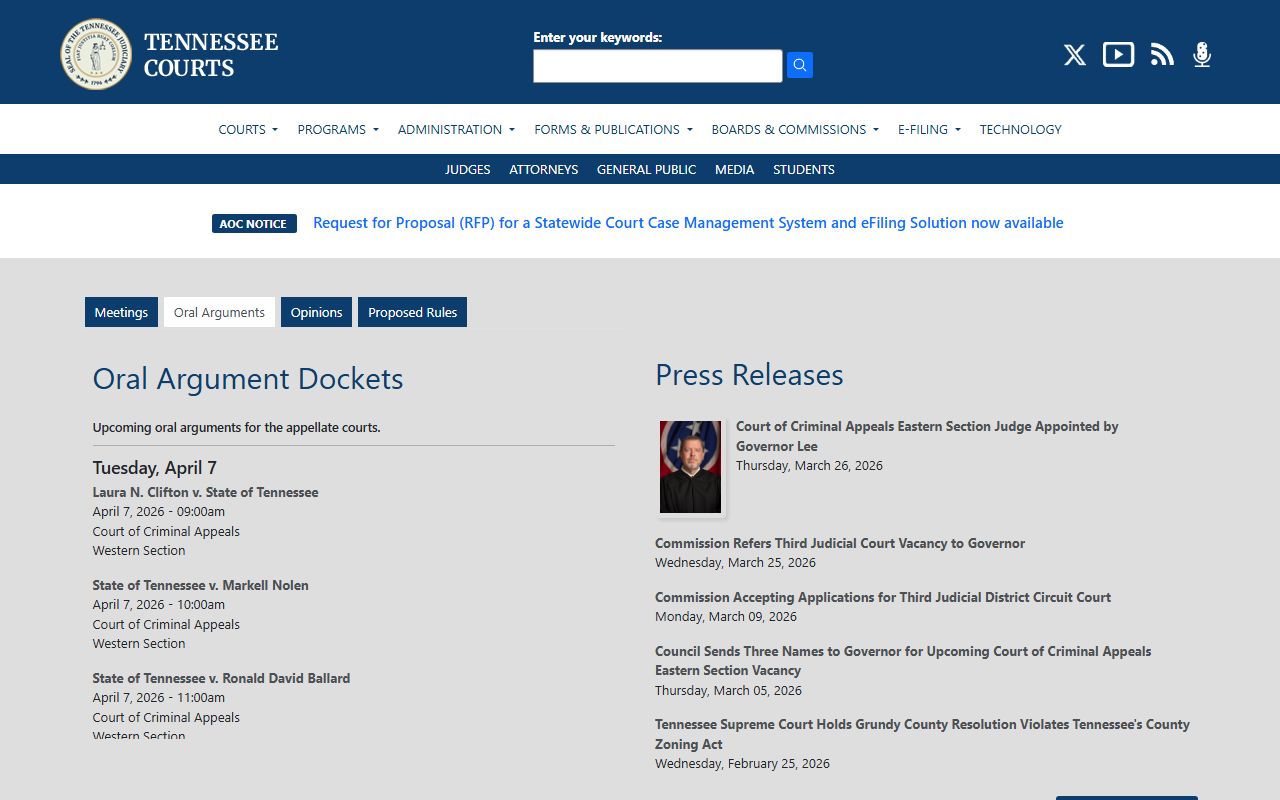
That statewide court view helps explain procedure, but the official Sumner County probate record still depends on the local clerk or the county archives that holds the series you need.
Note: Statutes explain why a probate file contains certain papers, but the county file is still the primary evidence of what was actually filed.
Get Sumner County Probate Court Records
If you need copies, first decide whether the request belongs with the current court clerk or with the archives. Sumner County's own public records page says court records are not handled by the general public records coordinator, so estate papers should be requested from the clerk of the court where the case was filed. Older probate materials, especially those tied to historic will books or loose estate packets, may be better handled through the county archives in Gallatin. The most useful request is narrow. Give the full decedent name, the year range, and the record type you want.
State resources help when local finding aids are not enough. The Tennessee State Library and Archives maintains statewide probate and microfilm resources, and the Tennessee probate overview at FamilySearch explains how county books and files were commonly preserved. Those state tools are especially helpful when you are trying to identify the right series before writing to Gallatin. They are not a substitute for the official Sumner County record, but they can narrow the request to something a local office can retrieve.
Because Sumner County records are largely intact, a failed first request often means the wording was too broad, not that the estate file is gone. Try the series name, the approximate year, and the kind of paper you need. A request for a will book entry, bond and letters record, or settlement is usually more effective than asking for all papers on a surname.
Sumner County Probate Court Records in Gallatin
Gallatin anchors almost every probate search in this county. It is the county seat, the place named in the courthouse and archives addresses, and the main destination for both current court routing and historical research. The County Clerk address from FamilySearch and the archives address from the county both sit on North Belvedere Drive in Gallatin, which makes the local geography easier than in counties where records are scattered across separate cities.
Gallatin also matters because it gives context to older record descriptions. When a source points to a Sumner County will book, probate record, or loose estate packet, it is describing a county record preserved through Gallatin offices even if the decedent lived elsewhere. That is why a Hendersonville family story, an obituary, or a property clue still leads back to Gallatin when the goal is the official probate court record.
Hendersonville Estate Searches
Hendersonville is one of the county's largest cities, but it is not a separate probate jurisdiction. If the decedent lived in Hendersonville and the estate was opened in Sumner County, the file still runs through county probate handling in Gallatin. The county public records page is useful on this point because it distinguishes municipal records from county court records. That keeps a search from drifting toward the wrong office just because the person lived in Hendersonville rather than in Gallatin itself.
The same rule applies across the county. Hendersonville can help you identify the right person, date, or family context, but the estate file remains a Sumner County court record. When you build a request around that county-wide structure, probate research becomes much more direct.
Cities in Sumner County
Sumner County Probate Court Records still route through the county seat and county probate system, but these city pages give you location-specific context for residents who begin the search from different communities inside the county.
Use these city pages when you want local access notes that still point back to Sumner County probate records.
Nearby County Searches
Sumner County borders other Tennessee counties that can matter when an estate was filed near a county line, involved land in more than one county, or belongs in a neighboring probate venue instead. Use these adjoining county pages when the record trail moves outside Sumner County.