
Search Tennessee Probate Court Records
Tennessee Probate Court Records can be searched through county courts, separate probate courts, local archives, and statewide research collections. Most Tennessee probate files stay with county clerks or clerk and master offices, while Davidson, Knox, and Shelby counties use separate probate courts for estate work. You can use online case tools for newer matters, county archives for older volumes, and statewide repositories for microfilm and historical indexes. That mix gives Tennessee searchers more than one way to trace wills, estate settlements, guardianships, inventories, and related probate filings.
Tennessee Probate Court Records Quick Facts
Tennessee Probate Court Records Search Basics
Tennessee probate files track what happened after a death. They show who filed the estate, who qualified as personal representative, when creditors were notified, and how property moved through the court. In most counties, the probate work sits with the county clerk, county court, or clerk and master. Davidson County, Knox County, and Shelby County are the main exceptions because they operate separate probate courts. That split matters when you search. The right office depends on where the decedent lived, when the estate was opened, and whether the record is still current or has already moved to archives.
The most useful statewide starting points are the Tennessee Courts portal, the Tennessee State Library and Archives, and the FamilySearch Tennessee probate guide. Those resources help you move from a name to a county, then from a county to a case file, will book, minute book, estate settlement, or guardianship record. If the file is modern, the county court or probate court usually controls access. If the matter is older, Tennessee archives and microfilm collections often become the better path.
The Tennessee Courts official portal is one of the best starting points for current court access, and the image below reflects that statewide court gateway.
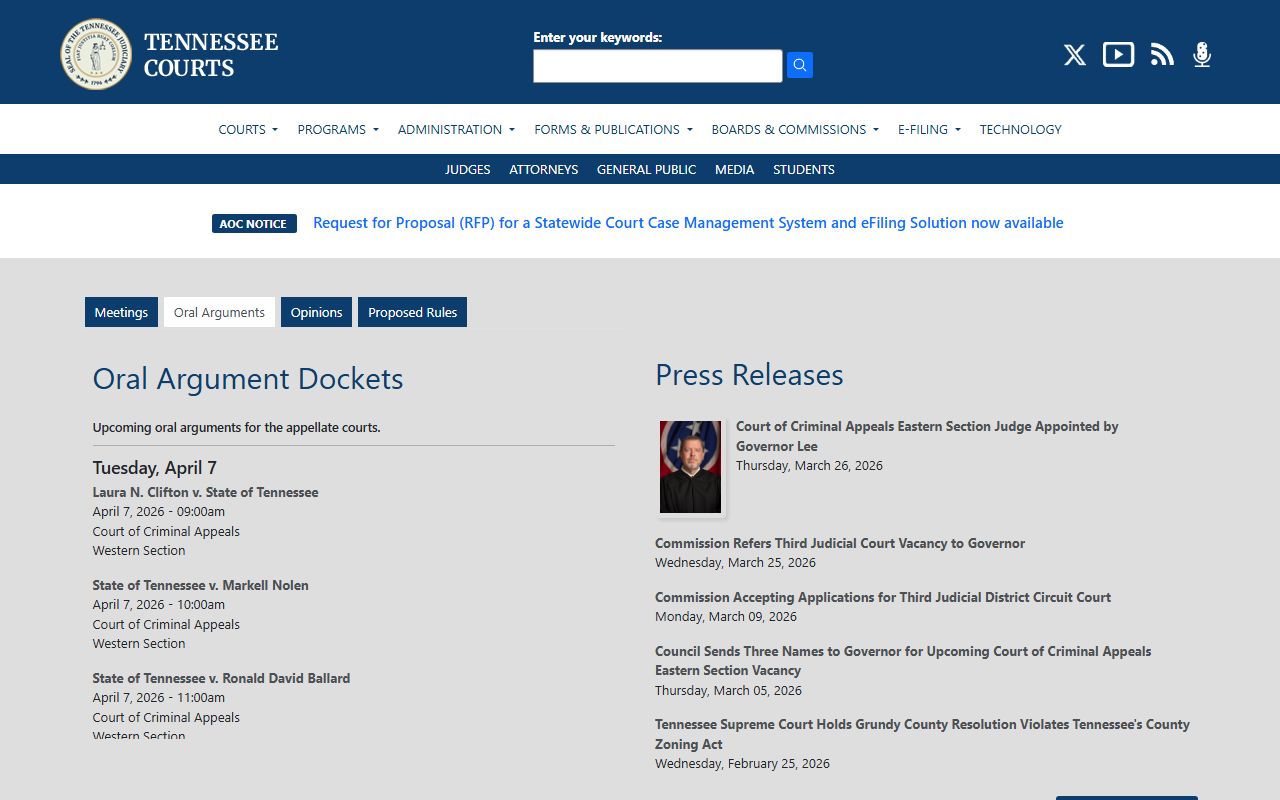
That statewide court entry point helps you identify court structure and forms before you move to the county-level probate office that actually keeps the file.
Where Tennessee Probate Court Records Are Kept
Tennessee does not keep every probate file in one central office. That is why county context matters so much. In many counties, the probate docket, will books, estate packets, and settlements are held by the county clerk or clerk and master. In Davidson, Knox, and Shelby, separate probate courts handle that work. The probate court or county office usually keeps recent files on site, while older Tennessee Probate Court Records may move to an archive room, a records center, or microfilm stored through the county or the state archive system.
The Tennessee State Library and Archives fills a major gap for historical research. TSLA holds microfilm copies of probate records from most Tennessee counties, along with probate court books, loose file references, and county survey material. That matters when a courthouse keeps only recent files on hand. A county office may tell you to check TSLA or a county archive for older wills, inventories, settlements, and guardianship volumes. Tennessee searchers often need both the local office and the state archive to finish a full probate search.
TSLA is the main archive hub behind many historical Tennessee Probate Court Records searches.
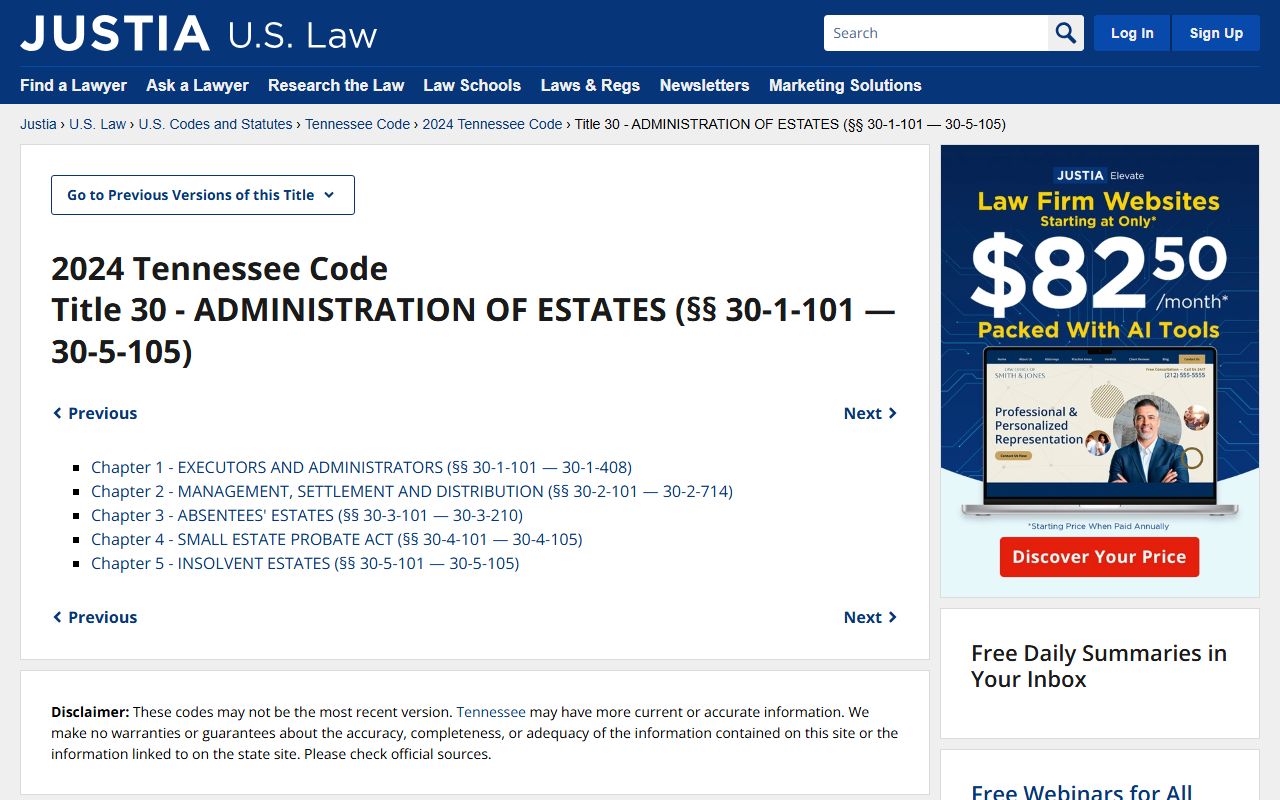
Use the state archive and statute framework together when you need to understand both where the file sits and what the record should contain.
Two broad Tennessee rules shape what appears in the file. Title 30 governs estate administration, while Title 32 probate-related procedures and Title 31 descent and distribution concepts affect wills and intestate estates. Tennessee law also expects inventories and recorded estate activity under sections such as Tenn. Code Ann. § 30-2-301, § 30-2-302, § 30-2-306, and § 30-2-307. Those sections help explain why the probate file may include notices, claims, inventories, and settlement papers.
Note: The office that opened the estate is usually the office that controls the best modern copy of the probate file.
How To Find Tennessee Probate Court Records
Start with the county. That is the key move. If you know where the decedent lived or where land was held, you can usually identify the right Tennessee probate office first and then narrow the search by year. Newer probate matters may be visible through a county court search page, a probate court lookup, or a linked case portal. Older Tennessee Probate Court Records are more likely to appear in will books, estate books, loose file indexes, or microfilm collections at TSLA, FamilySearch, or a county archive.
The Tennessee Public Court Records portal can help in some counties, but coverage varies by office. For broad historical work, the stronger path is usually the FamilySearch Tennessee probate guide, which explains the statewide book and file collections, and the Ancestry Tennessee probate collection, which offers indexed material for many counties. Those are high-authority research tools, but they still work best after you confirm the county first.
Before you request Tennessee Probate Court Records, gather the strongest details you have:
- Full name of the decedent
- County where the estate was likely opened
- Approximate year of death or probate filing
- Name of executor, heir, or guardian if known
- Case number, docket number, or will book citation if known
The statewide multi-county portal is useful for current court access in participating offices.
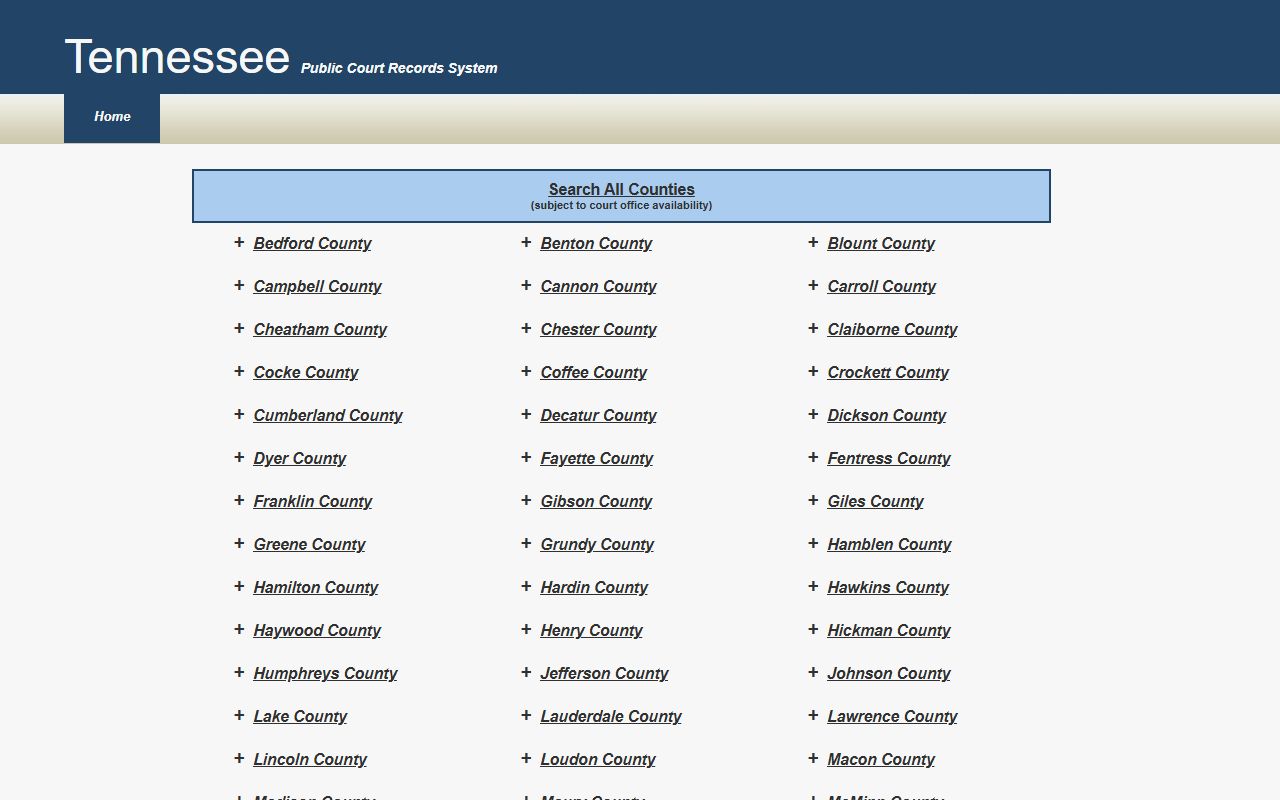
Even when a statewide search returns a lead, Tennessee researchers often still need the local probate office for certified or complete copies.
Tennessee Probate Court Records In Archives
Historical probate research in Tennessee often moves beyond the courthouse counter. FamilySearch notes that Tennessee Probate Court Books cover 1795 to 1927 and Tennessee Probate Court Files reach into 1955. Those collections include wills, bonds, petitions, inventories, administrations, settlements, decrees, and guardianship material. Many volumes include handwritten indexes at the front or back. That detail matters because older Tennessee probate books are often searchable only by using the book's own index before turning to the page entry.
Ancestry's Tennessee Wills and Probate collection also spans counties across the state and can be useful when you need indexed access. Still, Tennessee researchers should not assume that one database is complete. Some counties have better image coverage than others. Some years are represented only in books. Others survive as loose packet files. That is why strong probate research in Tennessee often means cross-checking the county office, TSLA, FamilySearch, and any county archive that houses non-current records.
The Ancestry Tennessee probate collection is one of the statewide tools many researchers use after they identify the right county.
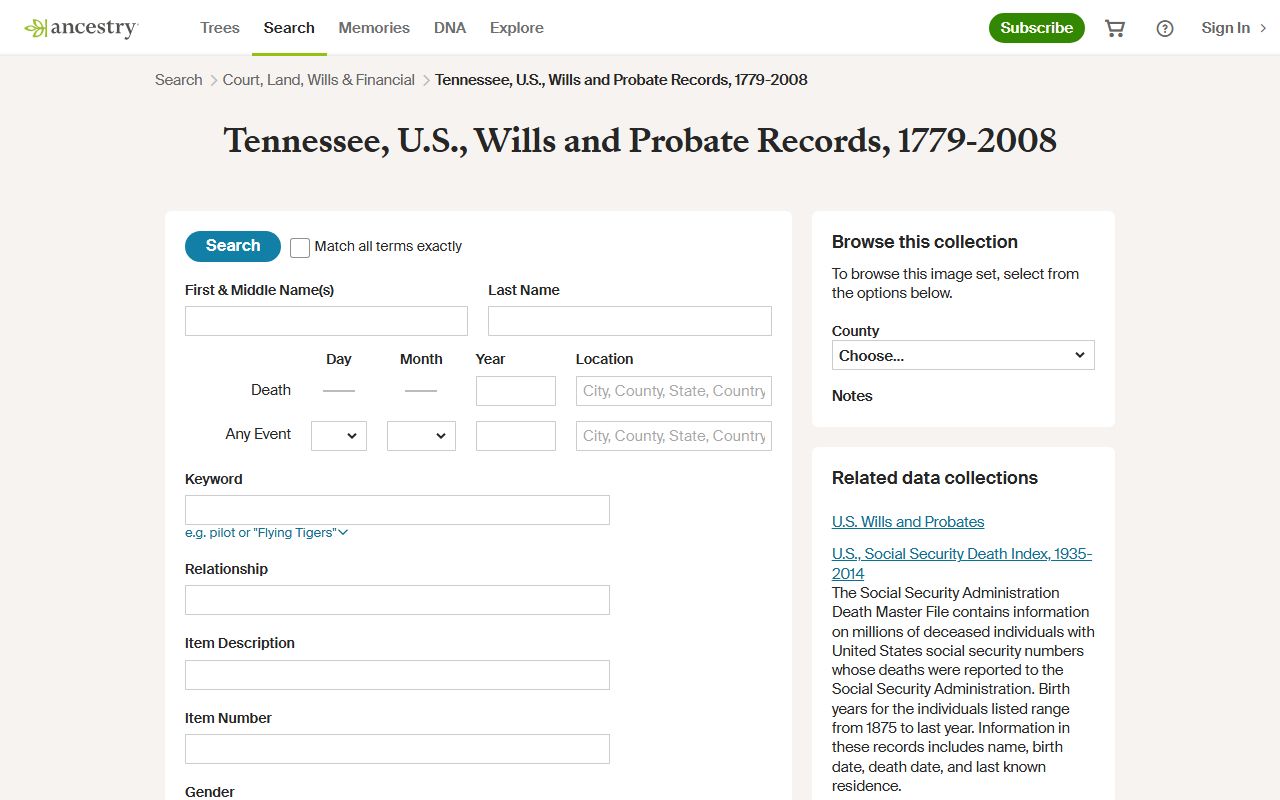
That collection can speed up name-based searching, but the final record trail still depends on the county office and archive copies.
Tennessee Probate Court Records And Death Proof
Probate searches often need a death record too. Tennessee's probate file may identify heirs and assets, but a death certificate often helps confirm date of death, residence, and family relationships before you request the estate packet. The Tennessee Vital Records Office handles statewide birth and death records, and the office notes that birth and death registration began in 1908, with records later transferring to TSLA after the retention period. That makes state vital records a strong support tool for Tennessee probate work, especially when an estate was opened in the twentieth century.
Probate timelines vary. Tennessee guidance and related research tools commonly describe probate as taking six to twelve months, though a small estate can move faster and a disputed estate can take far longer. That timeline matters because a recent death may produce filings that are still active, while an older death may already have a closed file in archives. Tennessee Probate Court Records can also include notices to creditors, which connect directly to the claims period described in § 30-2-307. If you are trying to understand why a file contains claims paperwork or publication notices, the statute helps explain the record trail.
The Tennessee Vital Records Office is often the supporting source people use before or alongside a probate file request.
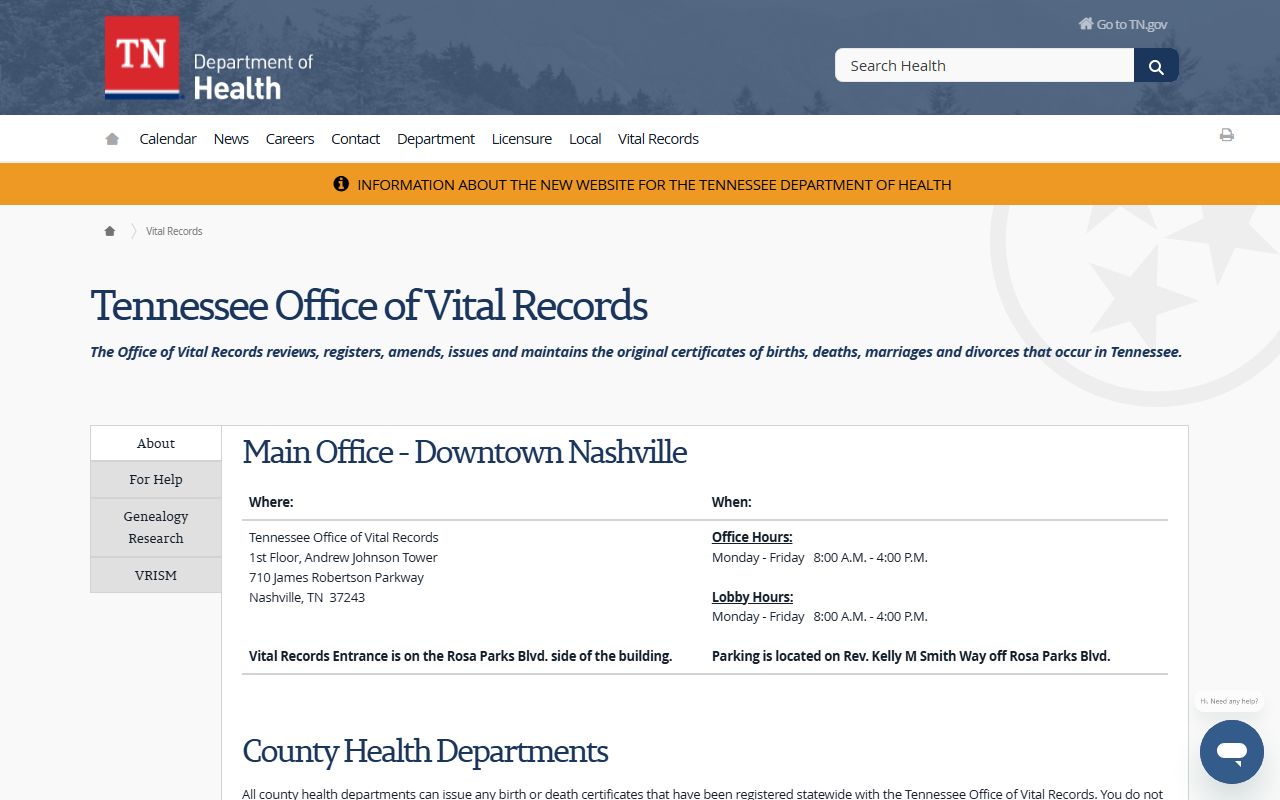
Vital records do not replace the probate file, but they often confirm the death facts needed to locate the right Tennessee estate proceeding.
Public Access To Tennessee Probate Court Records
Most Tennessee Probate Court Records are public, but public does not mean unrestricted. Tennessee Courts and county court offices apply access rules under Tennessee court policy, and sealed matters or protected personal information may be withheld. That means a Tennessee file may be open in general while still omitting specific personal identifiers or sealed attachments. Guardianship and conservatorship material can also involve tighter handling than a routine will book entry.
In practice, the best way to avoid delay is to be specific. Ask for the estate file, will book entry, letters testamentary, inventory, settlement, or guardianship docket by name. If you are mailing a request, many Tennessee offices want a self-addressed stamped envelope and payment by approved method. If you visit in person, bring identification and enough detail for staff to locate the estate. Older Tennessee Probate Court Records may need advance notice because archived books and microfilm are not always stored in the main clerk office.
Tennessee Probate Court Records often include these file types:
- Wills and will book entries
- Estate petitions and orders
- Inventories and appraisements
- Creditor notices and claims
- Settlements and accountings
- Guardianship and conservatorship papers
Note: If a county search tool shows only summary data, ask the local court whether the full image set is online or only available in person.
Browse Tennessee Probate Court Records By County
Each Tennessee county keeps probate records through its own court structure. Use the county pages to find the right office, online search options, archive sources, and record request details for that county.
Tennessee Probate Court Records In Major Cities
City pages show where local residents actually go for probate matters, which county office serves the city, and which local archive or historical source can help with older Tennessee Probate Court Records.