
Find DeKalb County Probate Court Records
DeKalb County Probate Court Records searches should begin in Smithville because county probate files, clerk books, and most estate record requests route through the local county office there. That county-first approach matters even when the family story starts in a smaller community or with an older land or cemetery clue. Probate work can include wills, estate administration papers, inventories, creditor filings, and later settlement material. This page shows how to narrow a DeKalb County Probate Court Records search by county creation date, clerk contact details, and Tennessee probate sources so you can move from a name to the right record series more efficiently.
DeKalb County Probate Court Records Quick Facts
DeKalb County Probate Court Records Office
The DeKalb County FamilySearch guide says the county was created in 1837 from Cannon, Jackson, and White counties and that the County Clerk maintains records from 1837. That gives DeKalb County Probate Court Records a clear local starting point. If an estate event predates the county's creation, the probate trail likely belongs in one of the parent counties instead. If the estate falls after county formation, Smithville is the practical place to begin.
The expanded county notes add that marriage and probate records begin in 1838 and list the County Clerk phone as 615-597-5177. Those local details matter because a well-formed DeKalb County Probate Court Records request should be tied to the county clerk, the likely year range, and the record type you want rather than a generic search for every paper tied to a surname.
| County Seat | Smithville |
|---|---|
| County Clerk | DeKalb County Clerk, Smithville, Tennessee 615-597-5177 |
| Probate Court | DeKalb County Court |
| Known Record Start | County records from 1837, with expanded clerk notes pointing to marriage and probate records from 1838 |
That local office context keeps the search grounded. It also helps distinguish between an active county request and a broader state-level research task when you are working on an older estate.
Search DeKalb County Probate Court Records
The best DeKalb County Probate Court Records requests are specific. Ask for a will, estate administration file, inventory, order, or settlement instead of asking for every probate item under a family name. Probate files branch into several record types, and the clerk can search more effectively when the request identifies which part of the estate trail you want. If you know only a surname, add the approximate death year and the county connection before you ask for copies or confirmation.
Date matters just as much as the name. DeKalb County did not exist before 1837, so a probate matter from 1836 cannot be in DeKalb County Probate Court Records. That type of venue check is often the fastest way to avoid a dead-end search. Once the year falls inside the county period, the Smithville clerk path becomes the right next step.
Useful details to gather before requesting DeKalb County Probate Court Records include:
- The decedent's full name and any spelling variants
- An estimated death year or probate filing range
- The record type, such as will, inventory, administration paper, or settlement
- Any book, page, or index clue already found
- A note on whether the estate falls before or after the county's 1837 creation
That short checklist keeps the request useful and gives the county office a much better chance of checking the right series on the first pass.
Note: If the year is uncertain, test it against the 1837 county creation date before widening the search to other counties.
DeKalb County Probate Court Records History
DeKalb County Probate Court Records begin with the county's formation in 1837. The county was carved from Cannon, Jackson, and White counties, which means older family lines can cross several probate jurisdictions even when the family stayed in roughly the same part of Tennessee. That history shapes the search. A probate file belongs to the county that had jurisdiction at the time of the estate, not simply to the place name that appears in later memory or local tradition.
The difference between records from 1837 and expanded clerk notes from 1838 is not a contradiction so much as a reminder that county record systems do not always settle into one neat starting date. Some series begin as the county is formed. Others become stable a year later when the clerk's books are fully established. For DeKalb County Probate Court Records, both dates help. The county history gives the legal boundary, while the clerk note gives a practical sense of when probate access becomes more concrete.
That makes the early record trail especially important. A mid-nineteenth-century probate entry can show how quickly county government began to document local estates and can also point back to earlier parent-county jurisdictions when the family history stretches before 1837.
DeKalb County Probate Court Records Online
The Tennessee State Library and Archives DeKalb County records guide is one of the most useful research aids for older DeKalb County Probate Court Records because it helps frame the county's preserved record coverage by date. Even when the local clerk remains the first stop for a request, a TSLA guide can sharpen the question and help you identify what may survive in county books, later archival storage, or related preserved series.
The Tennessee courts portal provides statewide court structure context when you need to understand how county probate work fits inside the larger Tennessee court system.
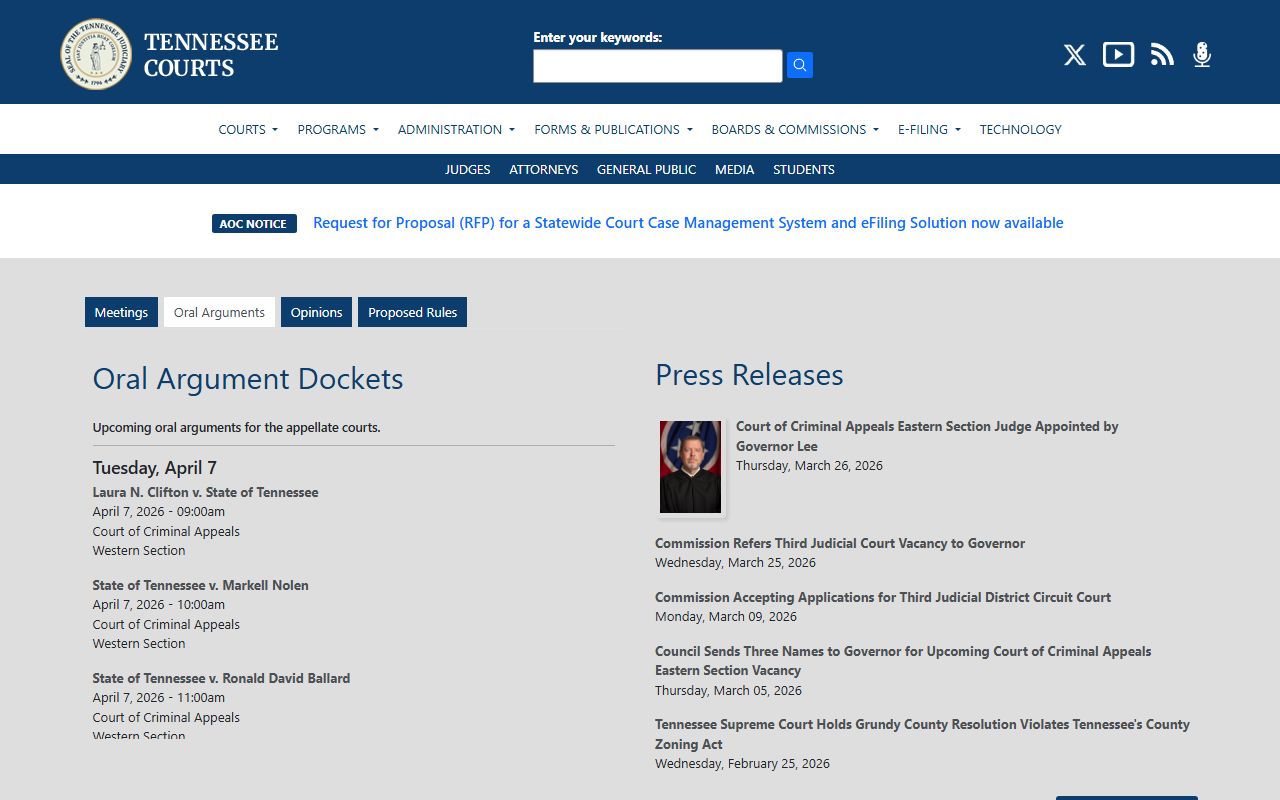
That state image is used here because there is no usable non-flagged DeKalb County image in the project, but the actual probate request still belongs in Smithville through the county clerk.
The Tennessee State Library and Archives remains the broader preservation source when a DeKalb County Probate Court Records search needs microfilm context, historical record guidance, or support beyond a simple county office call.
DeKalb Probate Records Law
DeKalb County Probate Court Records exist inside Tennessee probate law, so the state code explains why an estate file may contain many different papers. Title 30 covers estate administration. Title 31 explains succession when no valid will controls the estate. Title 32 governs wills and probate of wills. Those titles help make sense of the clerk records that can appear in DeKalb probate work.
The administration and claims sections also matter. Section 30-2-301 and Section 30-2-302 help explain why inventories and related estate papers appear after a representative qualifies. Section 30-2-306 and Section 30-2-307 help explain claims and notice issues that can expand the probate file beyond a short will entry.
That legal framework helps a researcher understand why one estate produces several related papers across time. The county file is not random. It reflects the steps Tennessee law required.
DeKalb Wills And Estates
Even though the county research packet is short, the working shape of DeKalb County Probate Court Records is clear. Searchers should expect wills, administration papers, inventories, claims, and later settlement material to appear across the estate trail rather than in a single neat record. That is why it helps to ask about record type first and then widen the search only if the first probate series does not answer the question.
Common DeKalb County probate record types to ask about include:
- Will books and probate admissions
- Administration papers and appointments
- Inventories and appraisements
- Claims and creditor-related filings
- Orders and settlements tied to the estate
That layered approach is the safest way to work an older estate. A short will entry may not answer everything, but the related probate papers often will.
Smithville Probate Routing
Smithville is the county seat, so it remains the practical starting point for DeKalb County Probate Court Records. If the estate belongs in DeKalb County, the county clerk path in Smithville comes first. If the event predates 1837, the search should move back to Cannon, Jackson, or White County depending on where jurisdiction would have rested at the time.
That venue check keeps the work efficient. It prevents a broad search from wandering when the county history itself already points to the right courthouse.
Cities in DeKalb County
DeKalb County Probate Court Records serve the whole county, but the county seat remains the key probate access point. If you want another Tennessee city page for comparison, use the statewide city directory below.
Nearby County Searches
DeKalb County borders other Tennessee counties that can matter when an estate was filed near a county line, involved land in more than one county, or belongs in a neighboring probate venue instead. Use these adjoining county pages when the record trail moves outside DeKalb County.