
Search Tipton County Probate Court Records
Tipton County Probate Court Records start in Covington, where the county seat and county court anchor probate work for estates, wills, and guardianship matters. Tipton County was created in 1823 from Indian lands and was previously part of Shelby County, so early family names may show up in older county books rather than in a modern online system. The best search begins with a person, a rough year, and a specific record series. That approach keeps the request local, avoids guesswork, and helps you move from a family story to the exact probate book, bond file, or will entry that matters.
Tipton County Probate Court Records Quick Facts
Tipton County Probate Court Records Office
The Tipton County FamilySearch guide gives the clearest local starting point. It says Tipton County was created in 1823 from Indian lands, notes the county's earlier connection to Shelby County, and lists the probate series that survive for researchers. Those series include Administrators', Executors' and Guardians' Bonds, 1835-1842, Administrators' Bonds and Letters, 1876-1901, Will Books, 1824-1859, and Wills, V. A-C, 1824-1918. That spread tells you this is not one flat record run. It is a set of distinct books and time ranges that need to be searched with care.
The expanded clerk note is just as useful because it says marriage and probate records begin in 1824 and gives the county clerk phone number as (901) 476-0207. For Tipton County Probate Court Records, that means Covington is the right place to start when you need a local response, even if the family lived somewhere else in the county. A brief call can confirm whether the item you need sits in a will book, a bond book, or an older record set that staff may have to pull from storage or microfilm.
| County Seat | Covington |
|---|---|
| Probate Court | Tipton County Court |
| County Clerk | (901) 476-0207 |
| Record Coverage | Marriage and probate records from 1824 |
| Named Series | Administrators', Executors' and Guardians' Bonds, 1835-1842; Administrators' Bonds and Letters, 1876-1901; Will Books, 1824-1859; Wills, V. A-C, 1824-1918 |
Because the named probate series cover different years, the office question is not just where the record is kept. It is also which book or packet should be searched first. That distinction matters in Tipton County Probate Court Records, especially when a surname appears in more than one generation or when an early estate needs a book run from the 1820s or 1830s.
Search Tipton County Probate Court Records
A good Tipton County Probate Court Records request is narrow and specific. Probate papers can include wills, administrator appointments, guardian bonds, letters, inventories, settlements, and related orders. Those items are part of the same estate trail, but they are not the same record. If you ask for the wrong series, the search can stall. If you name the person, the rough year, and the record type you want, the clerk or archive staff can move straight toward the right volume.
Before you request Tipton County Probate Court Records, gather the facts that help a county search run cleanly:
- The full name of the decedent, ward, or estate, with any spelling variants
- An estimated death year or filing range
- The exact record type, such as a will, bond, letters, or guardianship file
- Any book, page, index, or FamilySearch clue already found
- A note that the record should be searched in Covington under Tipton County Court
The book ranges in the FamilySearch guide help you choose the right path. If you are working on an early estate, start with Will Books, 1824-1859, and then check the Wills, V. A-C, 1824-1918 run for later coverage. If the person acted as an administrator or guardian, the bond series may be more useful than the will series. In Tipton County Probate Court Records, the right label can be the difference between a quick hit and a long search.
Tipton County Probate Court Records Sources
The best local source is the Tipton County FamilySearch page, because it names the county seat, the probate court, and the surviving probate books in one place. When local research is thin, that kind of county guide is the most reliable way to line up years, series, and office names before you make a request in Covington.
For preservation and back-file work, the Tennessee State Library and Archives is the next stop. The Tipton County microfilm listing at TSLA's Tipton County microfilm guide helps show what county material was preserved, while the broader Tipton County Records, 1823-1994 PDF gives a wider view of surviving county record coverage. Those guides are useful when a probate book is not on the clerk counter and you need to know whether TSLA has a copy or a reference trail.
The statewide court portal also matters for routing. The Tennessee Courts portal helps you confirm the state court structure before you make a county request. It is not a substitute for the Tipton file, but it gives a clean starting point when you are trying to separate a probate court question from a general court question.
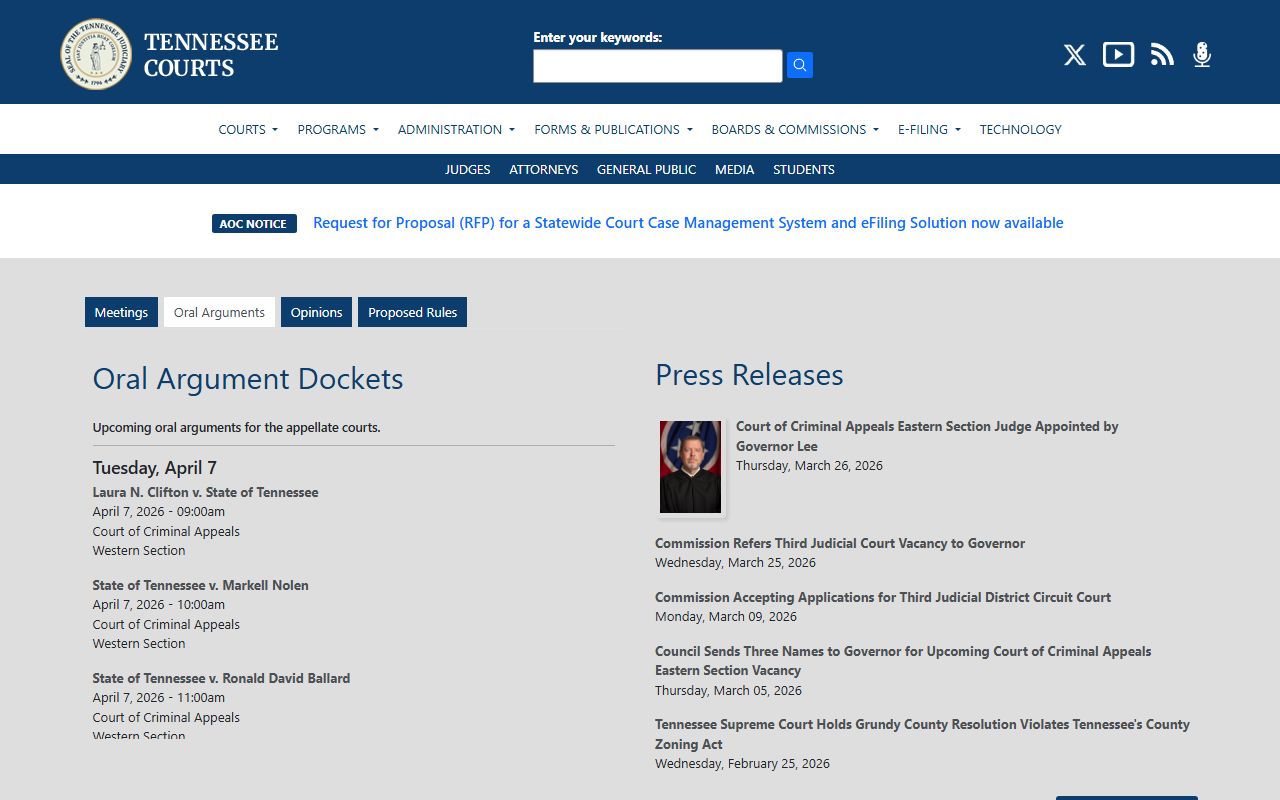
Use that portal as a routing aid, then return to Covington for the actual county record. A state-level overview is helpful, but the Tipton County book, bond, or letters file is still the document that answers the estate question.
Tipton County Probate Court Records Law
Tipton County Probate Court Records are shaped by Tennessee law, so the state code helps explain why a file may hold more than one kind of paper. Title 30 covers administration of estates. Title 31 explains descent and distribution when there is no will. Title 32 governs wills and probate of wills. Those titles do not replace the county record, but they do explain why an estate can move through letters, bonds, inventories, and settlement papers rather than through a single entry.
That legal pattern fits the Tipton series names well. An administrator bond can appear before a will book entry is fully settled. Guardianship papers can sit beside estate records if the court had to protect a minor or dependent. A later letters series can show a new step in the estate even when an earlier will book already names the heirs. In Tipton County Probate Court Records, the law and the books work together, and the file often reads like a sequence rather than a one-page answer.
For researchers, the practical point is simple. If a record feels incomplete, do not stop at the first volume. Move from the book title to the bond series, from the bond series to letters, and then to the later wills range if needed. That is the best way to read Tipton County Probate Court Records against the Tennessee legal framework that created them.
Covington Probate Routing
Covington is the county seat, so it is the right place to anchor a Tipton County Probate Court Records search. That matters because probate venue follows the county that handled the estate, not just the town a family remembers. If the decedent lived in a different part of Tipton County, the filing still belongs to the Covington county court path unless a record shows otherwise.
The county clerk phone number, (901) 476-0207, gives you a direct place to ask about the record type, the date range, and the likely storage format. A short request is better than a broad one. Say whether you need a will, bond, letters, or guardianship item, and include the approximate year. That is especially important when you are working with the early 1824-1859 will books or the 1876-1901 bonds and letters series.
If the first search does not hit, widen the request one step at a time. A will search may need to become a bonds search. A bonds search may need to become a letters search. Covington remains the starting point either way, because the county seat is where Tipton County Probate Court Records are routed and where the office can tell you which series is most likely to hold the answer.
Tipton County Wills And Bonds
The named Tipton County series are the backbone of the local probate trail. Administrators', Executors' and Guardians' Bonds, 1835-1842, can show who qualified to act and who backed the appointment. Administrators' Bonds and Letters, 1876-1901, can tell you when a later estate was opened and who received authority to proceed. Will Books, 1824-1859, give early probate access, while Wills, V. A-C, 1824-1918, extends the will record trail much farther into the county's history.
Each of those series answers a different question. A will can name heirs. A bond can identify sureties. Letters can show who was officially appointed. A guardianship record can explain why a minor's property moved through the court. When a family is spread across several generations, those details matter more than a simple yes or no on whether a surname appears in the index. Tipton County Probate Court Records are strongest when you read the books together.
FamilySearch also points to related records coverage for Tipton County, which can help when a family trail crosses from estate work into a broader court history. That is useful context, but the probate books still carry the main proof for wills, bonds, and administration. If you need to reconstruct an estate in Covington, start with the named probate series and then move outward only if the county books leave a gap.
Cities in Tipton County
Tipton County Probate Court Records serve the whole county, but the county seat remains the key probate access point. If you want another Tennessee city page for comparison, use the statewide city directory below.
Nearby County Searches
Tipton County borders other Tennessee counties that can matter when an estate was filed near a county line, involved land in more than one county, or belongs in a neighboring probate venue instead. Use these adjoining county pages when the record trail moves outside Tipton County.