
Search Lauderdale County Probate Court Records
Lauderdale County Probate Court Records begin in Ripley and follow the county's 1835 creation from Dyer, Haywood, and Tipton counties. That history matters because any probate file, will entry, or loose paper dated before the county was formed belongs elsewhere. The strongest search starts with the person, the rough year, and the record type. From there, you can work through the county clerk, the Lauderdale County Court, and the surviving book series that hold early estate business. If you are trying to find a record fast, focus on Ripley first and then move through the county's probate trail in date order.
Lauderdale County Probate Court Records Quick Facts
Lauderdale County Probate Court Records
The Lauderdale County FamilySearch guide says the county was created in 1835 from Dyer, Haywood, and Tipton counties. That date is the starting line for Lauderdale County Probate Court Records. It tells you what belongs in Ripley and what does not. The guide also places the probate court with Lauderdale County Court, so this is not a separate-city search. The county seat and the probate venue both point back to Ripley.
The expanded county clerk notes are just as useful. They say marriage and probate records begin in 1836, and they give the office phone as (731) 635-2561. That lines up with the county's first full year of record keeping. It also means a request can often be narrowed to the exact year after county formation. If you know the person's name and a likely filing year, the clerk can tell you whether the file is in a will book, a loose paper series, or another probate volume.
| County Seat | Ripley |
|---|---|
| Probate Court | Lauderdale County Court |
| County Clerk | Marriage and probate records from 1836 (731) 635-2561 |
| Early Records | Court Minutes 1836-1861, Probate Records 1836-1936 and 1836-2008, Will Books 1837-1855, Loose wills 1836-2008 |
The record spans tell a clear story. Lauderdale County Probate Court Records begin immediately after county creation, and the loose-will material runs far longer than the bound will books. That is a sign that the courthouse file is not one single run. It is a set of related series that need to be checked one by one.
Search Lauderdale County Probate Court Records
A focused request saves time. Start with the full name, a likely death year, and the kind of paper you need. Lauderdale County Probate Court Records can cover wills, administration papers, court minutes, loose wills, and probate records that stretch across more than one series. A will book entry is not the same thing as a loose will packet, and a minutes reference is not the same thing as a full estate file. The right label helps the office look in the right place on the first try.
When you contact the county, think in terms of record purpose. If the goal is family history, you may only need a will entry or a page that names heirs. If the goal is legal proof, ask for the specific filing that shows the estate was opened, the will was admitted, or the matter was settled. Lauderdale County Probate Court Records often move through more than one stage, so a short index line may lead to a longer file when the clerk checks the bound volumes and loose papers together.
Before you send a request, keep the details simple and local. Use Ripley, the estimated year, and the record type. That is enough for most first-pass searches. If you already found a FamilySearch citation or a page reference, include it. If not, give the office the best year range you can and let the county series guide the search.
Lauderdale County Probate Court Records History
Lauderdale County was created in 1835, so its probate record trail starts in the middle of the 1830s rather than in the territorial period. That makes the county history easy to place and easy to use. Once the county was formed, estate business began to appear in Ripley almost at once. The local record set then grew into the series named in the research: Court Minutes, 1836-1861; Probate Records, 1836-1936; Will Books, 1837-1855; Loose wills, 1836-2008; and Probate records, 1836-2008.
Those spans show two things. First, Lauderdale County Probate Court Records are rooted in the first year of county operation. Second, the bound book run is not the whole story. A person may appear in a will book, then again in loose papers, and then again in probate records or minutes. That is normal for Tennessee estate work. It means you should not stop after the first index hit. The better method is to follow the record chain from the earliest clue to the last settlement paper.
The long loose-will range is especially important. Loose wills reaching to 2008 suggest that later probate material can still be part of the county file even when the older book series have closed. In practical terms, Lauderdale County Probate Court Records may survive as both historical and modern record groups. The research has to match the date range to the right series, or it is easy to miss the file entirely.
Ripley Probate Routing
Ripley is the county seat, so it is the place where Lauderdale County probate work centers. That matters more than the town name on a family tree. If an estate was opened in Lauderdale County, the filing route runs through Ripley. The county court and county clerk are the local points of contact, and both of them matter when you are trying to confirm whether a will, an order, or a loose paper packet is on file.
Ripley also helps you keep the search narrow. Lauderdale County is not a large county, but the probate record trail still crosses several series and more than one time period. If a request starts with only a surname, the office has to guess which era to check. If the request starts with Ripley, a year, and a record type, the search becomes much more practical. That is the difference between a broad county question and a useful probate request.
Lauderdale County Probate Court Records Tools
For a state-level visual reference, the Tennessee Courts official portal shows the court system that frames Lauderdale County probate work.
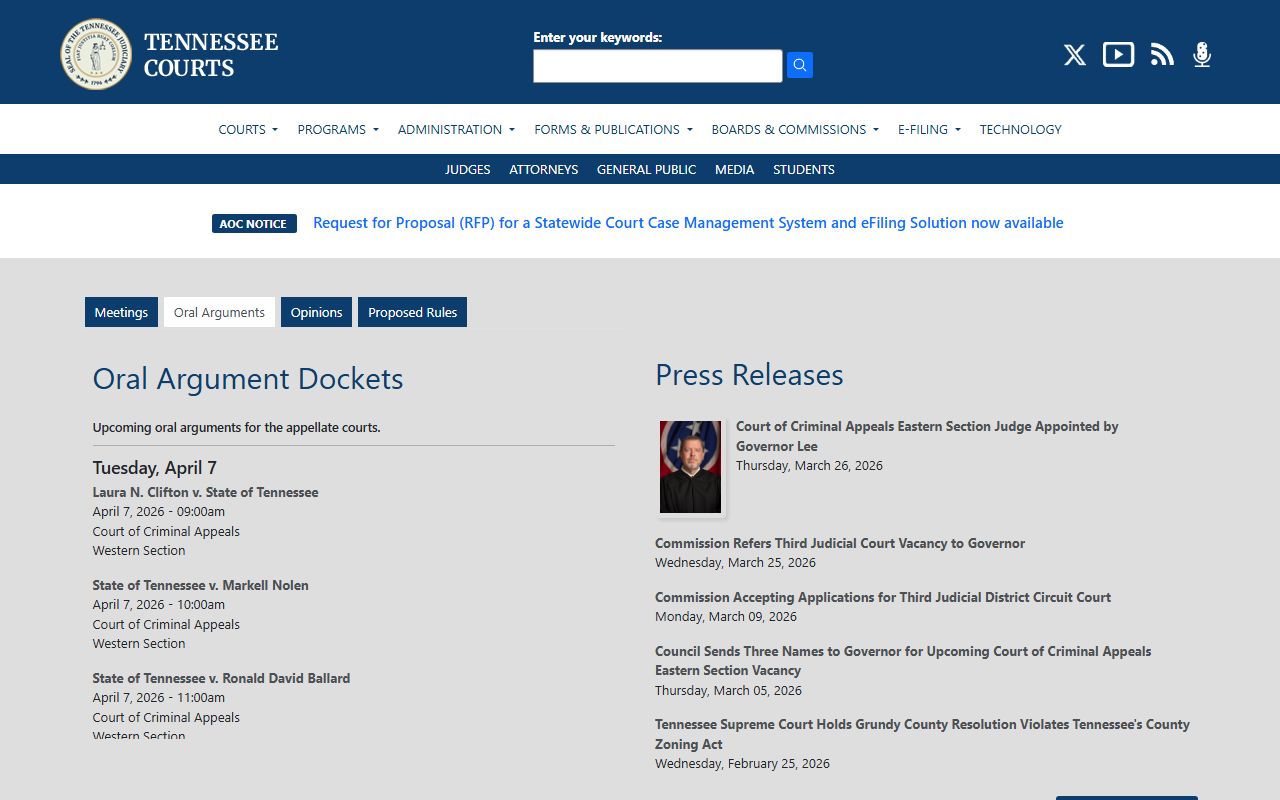
That fallback image is useful here because no usable local county image is available. It still points you back to the official state court setting before you make a county request in Ripley.
Two TSLA resources are the next best research stops. The Lauderdale County microfilm guide helps identify preserved county records, while the Lauderdale County records guide gives a wider span for county material. Together, they make it easier to tell whether a probate clue should be looked up as a bound volume, a filmed county series, or a later record run.
FamilySearch remains the best starting point for the county history, the county seat, and the basic probate office structure. When you combine that with the TSLA guides, Lauderdale County Probate Court Records become much easier to sort by year and record type.
Lauderdale County Probate Law
Lauderdale County Probate Court Records are shaped by Tennessee probate law. The county file exists because state law requires a process for wills, estates, claims, and distribution. Title 30 covers administration of estates, Title 31 covers descent and distribution, and Title 32 governs wills. Those three titles explain why a single estate may create several papers in different record books.
That legal structure matters for search strategy. An estate with a will may leave a will book entry, creditor notice, inventory, or final settlement. An intestate estate may leave administration papers and distribution orders instead. The statute titles are useful because they show why Lauderdale County Probate Court Records can look fragmented when they are actually following a normal probate process.
For a researcher, the main point is simple. The county record is the proof. The statute titles are the map. If you need to understand why one name appears in multiple estate papers, the code helps explain the sequence, but the Ripley file is still the source that answers what happened in that case.
Lauderdale County Wills And Estate Files
Lauderdale County Probate Court Records include more than one kind of estate paper. The county's own record spans point to court minutes, probate records, will books, and loose wills. That means the research has to move in layers. Start with the will or probate index if one exists. Then check the bound volume. If the search stops there, move to loose papers and the broader probate record range. The file may be split across several places, but the estate story is usually still there.
This layered approach is especially helpful when the estate is older. Will Books run from 1837 to 1855, which gives you a clear early book series to inspect. Probate Records run from 1836 to 1936 and also to 2008 in the broader county research notes, so the later file trail is much longer. Loose wills also continue to 2008. Those facts matter because they tell you that Lauderdale County Probate Court Records are not frozen in one historic shelf. They continue across many decades.
When you are trying to get a copy, ask for the exact item. A will, a minute-book entry, an estate packet, or a loose-will file each answers a different question. If your goal is proof of heirs, a will may be enough. If your goal is a complete estate history, ask for the related minutes and probate papers too. The county series will guide the rest.
Cities in Lauderdale County
Lauderdale County Probate Court Records serve the whole county, but the county seat remains the key probate access point. If you want another Tennessee city page for comparison, use the statewide city directory below.
Nearby County Searches
Lauderdale County borders other Tennessee counties that can matter when an estate was filed near a county line, involved land in more than one county, or belongs in a neighboring probate venue instead. Use these adjoining county pages when the record trail moves outside Lauderdale County.