
Bledsoe County Probate Court Records
Bledsoe County Probate Court Records are centered in Pikeville and usually start with the county clerk, not with a city office or a statewide index. If you are looking for a will, an estate packet, guardianship papers, or a later probate book entry, begin with the county and the approximate filing year. Bledsoe County has probate material dating back to the start of the county's record keeping, but some early files are incomplete, so the safest approach is to search both local custody and preservation copies. This page shows where to begin and how to move from a name to the record that actually matters.
Bledsoe County Probate Court Records Quick Facts
Bledsoe County Probate Court Records Office
Bledsoe County government says the County Clerk keeps probate records from 1808 and marriage records from 1808 as well. That matters because the clerk office is the first stop for Bledsoe County Probate Court Records, especially when you need the local file rather than an index. The county also identifies the probate court as the Bledsoe County Court, so a probate question should be routed by county office, not by a separate city courthouse.
The current clerk office is at 2260 Main Street, Pikeville, TN 37367, and the phone number listed by the county is 423-447-2131. If a probate matter has drifted into a related civil dispute or a separate court track, the Circuit Court Clerk can be reached at (423) 447-6241. The county site also notes that historical records are housed at the county level, which is useful when a search begins with a modern request but ends in older storage or a preserved book.
| County Seat | Pikeville |
|---|---|
| County Clerk | 2260 Main Street, Pikeville, TN 37367 423-447-2131 |
| Probate Court | Bledsoe County Court |
| Probate Records | Kept by the County Clerk from 1808, with historical records housed at the county level |
That office structure is straightforward, but the record trail is not always. A modern estate request may still lead to an older probate book, a microfilm copy, or a county-held historical file before you get a complete answer.
Search Bledsoe County Probate Court Records
The best Bledsoe County Probate Court Records search starts with the decedent's full name, an approximate death year, and the type of record you want. A request for a will, an inventory, a bond, a guardianship file, or a settlement is easier to route than a broad surname inquiry. Since the county clerk has probate and marriage records from 1808, a family researcher can sometimes use a marriage entry to confirm a spouse or spelling before asking for the estate file.
Bledsoe County is small enough that local memory can be helpful, but the probate record still lives in a county office. Give the clerk enough detail to narrow the file, and say whether you are seeking a bound book entry, a loose estate packet, or a copy of a specific document. If you already have a book citation from FamilySearch or TSLA, include it. That shortens the search and makes it easier to locate the exact Bledsoe County Probate Court Records page or packet that belongs to the estate.
Useful details to gather before you request Bledsoe County Probate Court Records include:
- The decedent's full name and any known spelling variants
- An approximate death year or estate filing window
- The record type, such as a will, inventory, bond, letters, or guardianship paper
- Any volume, page, or index clue already found
- A note that the estate should be checked in Bledsoe County, not a nearby county
When a search returns nothing immediately, do not assume the file never existed. Early Bledsoe County Probate Court Records can be incomplete because of record loss, so a missing page in one series may still be followed by a useful entry in another series or on microfilm.
Bledsoe County Probate Court Records History
Bledsoe County was created on November 30, 1807 from Roane County and Indian lands, and probate recording followed soon after. The county clerk's probate records begin in 1808, which gives Bledsoe County Probate Court Records a long local run even though some early material is incomplete. That early start is a useful clue for family historians. If a death or estate event appears close to the county's creation date, the file may be in Bledsoe County rather than in a parent county.
The FamilySearch county guide says the clerk has marriage and probate records from 1808, and it identifies several useful probate series for Bledsoe County. Those include Administrators', Executors' and Guardians' Bonds and Letters, 1909-1969, and Wills and Inventories, 1884-1931. The same guide also notes that Tennessee Probate Court Books include Bledsoe County records. That means the county's probate trail is not limited to one loose packet. It may run through a book entry, an index, a set of letters, or a preserved microfilm copy.
Those historical series give the county real depth. Wills and inventories run from 1884 to 1931. Administrators', executors' and guardians' bonds and letters run from 1909 to 1969. The Tennessee Probate Court Books collection also includes Bledsoe County material, and the clerk-held probate and marriage records begin in 1808. That layered history explains why a Bledsoe search should move from the county clerk to preservation tools when needed. Some records are still county held, but older books and earlier estate papers may be easier to find through the state archive or a digital collection than by a plain office request alone.
Pikeville Probate Routing
Pikeville is the county seat, so it is the practical starting point for Bledsoe County Probate Court Records. If you know the estate belongs in Bledsoe County, the clerk office in Pikeville is where the request begins. That keeps the search local and avoids the common mistake of sending a probate question to the wrong county just because a family lived near a border road or used a nearby town for church, trade, or mail.
It also helps to separate probate from other county records. Land records are kept in the Register of Deeds office, not in the probate file, so a deed search is not a substitute for an estate search. When the probate trail is active, the clerk remains the main office. When the matter turns into a court dispute, the Circuit Court Clerk may become relevant. That office distinction keeps Bledsoe County Probate Court Records requests focused on the right file group.
Bledsoe County Probate Court Records Online
The Bledsoe County FamilySearch guide is the best local starting point for online probate research because it ties the county's record history to specific series and dates. It confirms the 1808 start for clerk-held probate records, names the probate series that survive, and points researchers toward Tennessee Probate Court Books. For a county with early record loss, that combination of date, series, and preservation note is especially useful.
FamilySearch's Tennessee Probate Records overview explains the larger record system behind Bledsoe County Probate Court Records. It is helpful because it shows how wills, administrations, guardianships, bonds, inventories, and settlements were commonly filed across Tennessee. If you are trying to figure out whether a Bledsoe estate should appear in a bound book or a loose packet, the statewide guide helps you decide which collection to check first.
The Tennessee courts official portal is the statewide reference point for current court structure and for understanding how Tennessee's courts fit together.
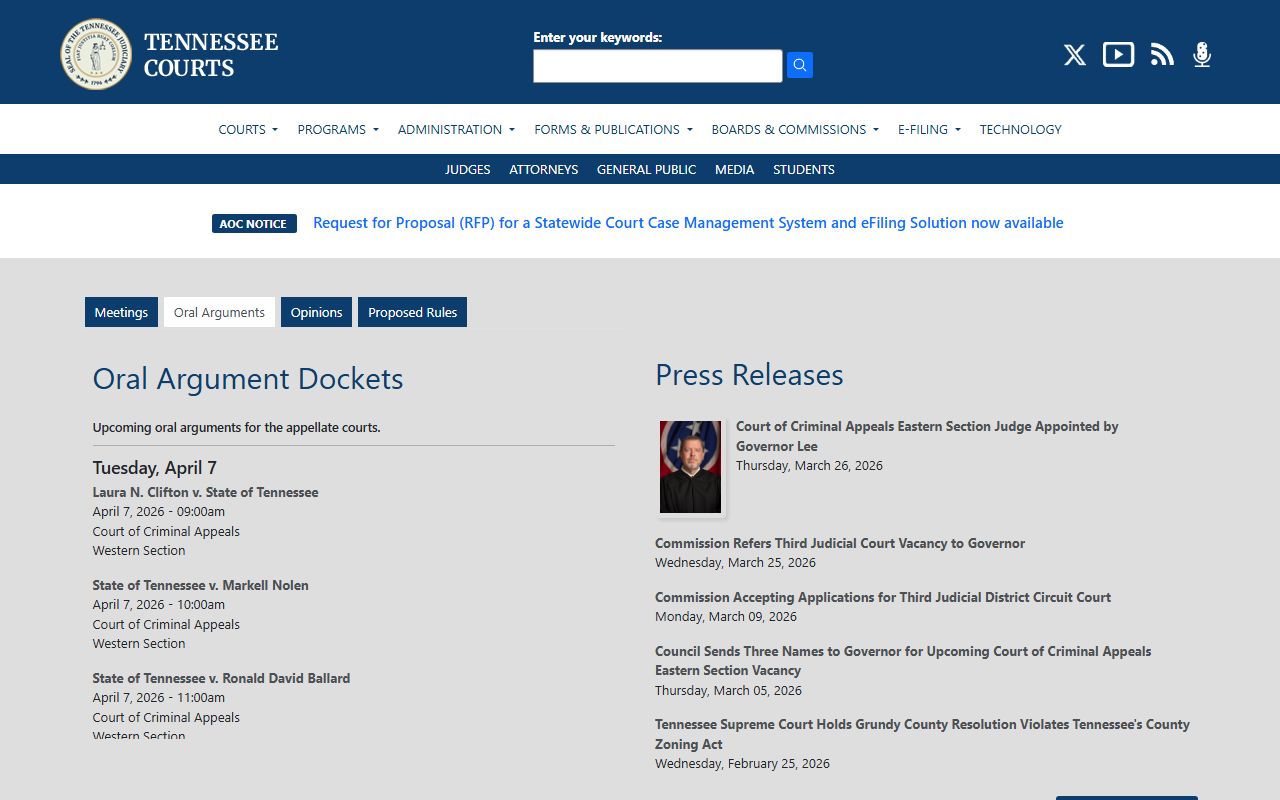
Use the statewide portal for context, then return to the Bledsoe County Clerk when you need the actual estate file, book entry, or preserved copy.
For older preservation work, the Tennessee State Library and Archives is the state repository to check when the county copy is thin, damaged, or hard to reach. TSLA microfilm copies can fill gaps left by local loss, and that is important in Bledsoe County because early probate material is not perfectly complete.
Bledsoe Probate Records Law
Bledsoe County Probate Court Records sit inside Tennessee probate law, so it helps to know which title applies to which kind of file. Title 30 covers administration of estates, which is why you see appointment papers, inventories, and settlement filings in a probate packet. Title 31 comes into play when there is no valid will and the question turns to heirs and distribution. Title 32 governs wills and probate of wills, which is the starting point for many estate files in Bledsoe County.
The probate paper trail often grows because the law requires notice and recording. Section 30-2-306 and Section 30-2-307 help explain why creditor notices, claims, and claims deadlines may appear in the same estate file. Those papers are part of the probate story, not side notes.
For Bledsoe County research, the law matters mainly because it tells you what kinds of documents to expect. A will may be only the first page of the case. The later file can include bonds, letters, inventories, claims, and final settlements that create the record trail you need to prove who handled the estate and how it moved through court.
Bledsoe County Probate Court Records Packets
Some of the most useful Bledsoe County Probate Court Records are not clean bound book entries. They are loose papers, packet-style files, or clerk-held groups that preserve a fuller estate story. That is why the FamilySearch probate court books and files tools matter. They help researchers move beyond a single will reference and into the papers that show bonds, inventory lists, letters, and supporting orders. In a county with early record loss, that extra layer can make the difference between a dead end and a complete line of proof.
The TSLA microfilm note for Bledsoe County is also important because it gives researchers a preservation path when the local file is not enough. If the county clerk has only part of the story, a microfilm copy or a state-held image may preserve the missing page. That is especially helpful for older Bledsoe County Probate Court Records, where the surviving material is often scattered across books, film, and clerk storage rather than gathered in one neat packet.
Record types that commonly show up in Bledsoe probate research include:
- Wills and probate orders
- Letters of administration and letters testamentary
- Inventories and appraisements
- Bonds for administrators, executors, and guardians
- Settlement papers and related accountings
When you know which of those papers you need, it becomes easier to ask for the right series and avoid a broad request that returns only a partial answer.
Search Records Again
If the first Bledsoe County Probate Court Records search does not return a match, try a different record type before you widen the county. A will may not be indexed the same way as an administration file, and a guardianship paper may appear in a different series from a settlement. Because early records can be incomplete, a second pass with a narrower date range often works better than a broad surname sweep.
Local help can still make a difference once you have a county clue. A name, a church, a cemetery, or a family farm near Pikeville may point you to the right generation, but the probate file remains the controlling county record. Keep the search centered on Bledsoe County, then use preservation sources when the clerk file does not answer the whole question.
Cities in Bledsoe County
Bledsoe County Probate Court Records serve the whole county, but the county seat remains the key probate access point. If you want another Tennessee city page for comparison, use the statewide city directory below.
Nearby County Searches
Bledsoe County borders other Tennessee counties that can matter when an estate was filed near a county line, involved land in more than one county, or belongs in a neighboring probate venue instead. Use these adjoining county pages when the record trail moves outside Bledsoe County.