
Search Cumberland County Probate Court Records
Cumberland County Probate Court Records are the place to start when you need a will, estate file, bond, inventory, or other probate paper connected to Crossville or any other part of the county. The most productive search begins with the full name, a likely year, and the exact record type you want. Because probate material can sit in clerk books, estate packets, or older microfilm series, a county-first request is usually faster than a broad surname search. This page points you to the local office, the state research aids, and the record series most likely to help you get the document you need.
Cumberland County Probate Court Records Quick Facts
Cumberland County Probate Court Records Office
The Cumberland County FamilySearch guide says the county was created on November 16, 1855, from Bledsoe, Fentress, Morgan, Putnam, Rhea, Roane, and White counties. It also notes that the County Clerk maintains records from 1855 and that marriage and probate records begin in 1856. That matters because Cumberland County Probate Court Records are not an abstract county concept. They are a real local record set tied to a specific courthouse history and a specific clerk office in Crossville.
Cumberland County government identifies the County Clerk as the office that maintains probate records and gives the clerk phone number as (931) 484-5559. When you need Cumberland County Probate Court Records, that local clerk path is the first place to confirm whether you are asking for an active file, a bound book entry, or an older record that may need microfilm support or archive help.
| County Seat | Crossville |
|---|---|
| Probate Court | Cumberland County Court |
| County Created | November 16, 1855, from Bledsoe, Fentress, Morgan, Putnam, Rhea, Roane, and White counties |
| County Clerk Records | Maintains records from 1855; marriage and probate records from 1856 |
| County Clerk Phone | (931) 484-5559 |
The practical rule is simple. Start with the County Clerk in Crossville, name the person and date range, and ask whether the record is in a clerk book, an estate packet, or a historical series that now depends on TSLA or microfilm for access.
Search Cumberland County Probate Court Records
A focused request gets better results for Cumberland County Probate Court Records. Probate can mean a will, an administrator appointment, a bond, an inventory, a settlement, a claim, or a court order. Those record types are related, but they are not interchangeable. If you ask for the wrong series, the office may still help, but your search will move more slowly than it needs to. The best request names the decedent, gives an estimated filing year, and identifies the paper you want.
Before you request Cumberland County Probate Court Records, gather the most useful clues you already have. A date from a tombstone, obituary, cemetery record, family Bible, land transfer, or prior index entry can save a lot of back-and-forth. If the person lived in Crossville, Pleasant Hill, Crab Orchard, Monterey, or another Cumberland County community, that place name can help verify identity, but the request still belongs at the county level because probate is filed by county, not by town.
Helpful details to gather before you ask for Cumberland County Probate Court Records include:
- The decedent's full name and any alternate spelling
- An estimated death year or probate filing range
- The exact record type, such as a will, bond, inventory, or estate settlement
- Any book number, index entry, or file clue you already have
- A note that the matter should be checked in Cumberland County Court records in Crossville
That kind of request is especially useful when the same surname appears in several Tennessee counties. A narrow search gives the clerk a better chance of finding the correct estate file on the first pass.
Cumberland County Probate Court Records and County History
Cumberland County was created in 1855, so its probate record trail is younger than many East Tennessee counties. That makes the county creation date a useful research marker. By inference from the county's formation, an estate opened before November 16, 1855 would have been handled in one of the parent counties, not in Cumberland County. That is why the parent-county list matters so much for older family research.
The parent counties were Bledsoe, Fentress, Morgan, Putnam, Rhea, Roane, and White. If your family line crosses one of those county lines, Cumberland County Probate Court Records may be only part of the story. A death, guardianship, or settlement could begin elsewhere and later show up in Cumberland County only after the county was formed and the family moved into the area. Knowing the county's origin prevents wasted time in the wrong courthouse books.
The county history also helps explain why early record runs are so valuable. Probate records from 1856 are close to the start of county government, which means the earliest estates can preserve strong clues about household structure, heirs, land, and local economic life. Even a short entry may point you toward a more complete probate packet, inventory, or settlement record.
Cumberland County Probate Court Records and Tennessee Courts
The Tennessee Courts portal is the state-level reference point for current court information, and it is the best official place to confirm statewide probate context before you request a county record. The portal does not replace Cumberland County Probate Court Records, but it helps you understand how Tennessee courts organize access and how to approach the county with the right question.
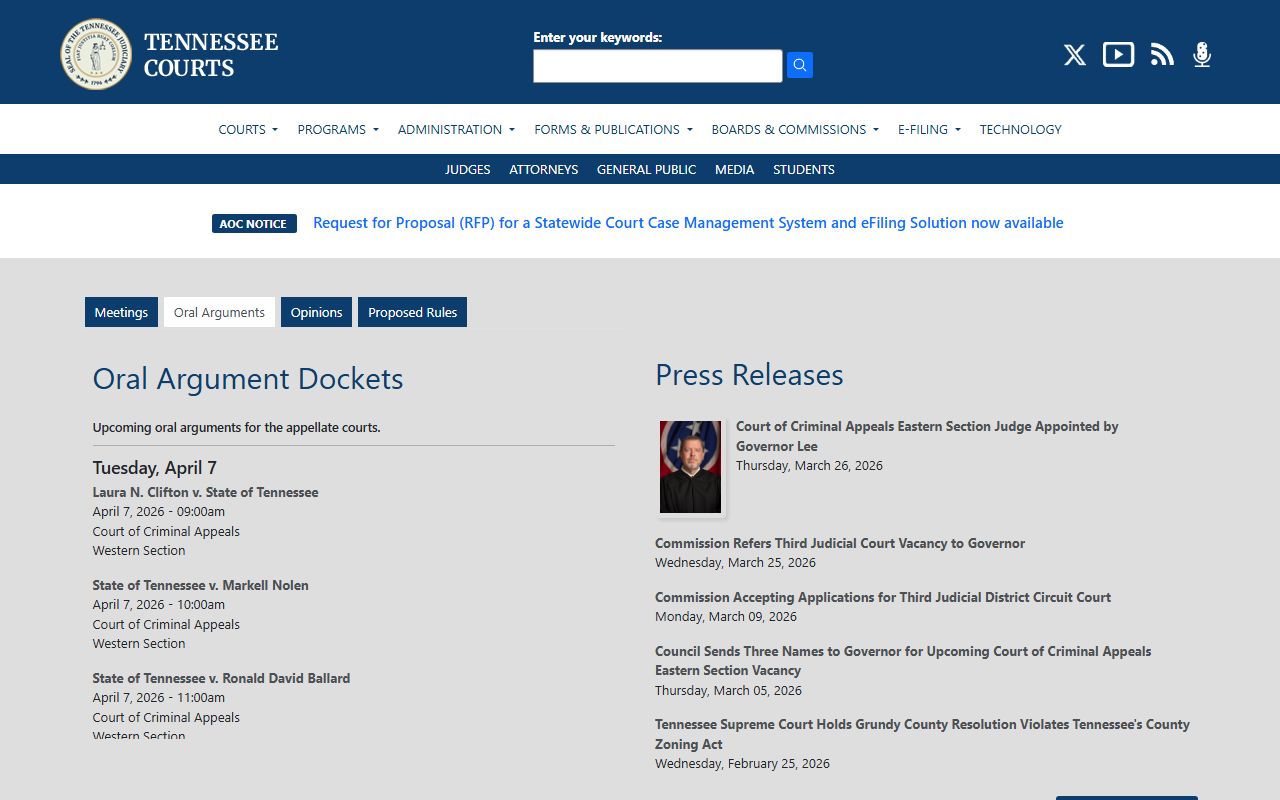
Use that statewide reference to verify the court framework, then keep the actual record request focused on Cumberland County and the specific probate series you need.
For researchers who need statutory context, Tennessee probate law is laid out across Title 30, Title 31, and Title 32. Those titles explain why Cumberland County Probate Court Records can include wills, administration papers, inventories, and later settlement materials rather than a single page labeled "probate."
Crossville Probate Routing
Crossville is the county seat, so it is the place to start when you are trying to get Cumberland County Probate Court Records. That venue rule matters even if the person lived in Pleasant Hill, Crab Orchard, or another community in the county. The county seat is where the clerk office can confirm whether the file is active, archived, or available only through a historical series.
The County Clerk phone number, (931) 484-5559, is the fastest local contact in the research you provided. If you call, be ready with the person's name, approximate death year, and the exact probate item you want. A concise request usually gets you closer to the right record book or packet faster than a general inquiry about "anything probate."
That routing step also helps when a family has multiple people with the same surname. A clerk can often tell you whether the record is likely to be in a will book, an estate settlement, or another clerk-maintained series before you ask for copies.
Cumberland Wills and Estate Files
Cumberland County Probate Court Records are useful because they preserve more than a final will. The estate trail may include wills, administrator or executor appointments, bonds, inventories, claims, settlement papers, and later orders. Those records answer different questions. A will may show who inherited. A bond may identify the sureties. An inventory can show household property and land clues. A settlement may show how the estate closed.
That layered record structure is why a single search result often is not enough. If you find only a will index entry, look for the related inventory, bond, or settlement before you stop. Cumberland County Probate Court Records work best when you treat them as a record group instead of a single item. The fuller the probate packet, the more likely it is to connect family names, places, and property in one place.
Useful Cumberland County probate series to ask about include wills, will indexes, administrations, bonds, inventories, appraisements, claims, and estate settlements. If the record is not in a bound volume, ask whether it survives as a loose paper file or a microfilmed packet. That small distinction often makes the difference between "not found" and "located."
TSLA Microfilm and County Research
The Tennessee State Library and Archives is the key state repository to check when Cumberland County Probate Court Records need historical support. TSLA has microfilm for many Tennessee counties, and its holdings can help you identify where older county series were preserved. If you are working with a nineteenth century estate, the TSLA route is often the most efficient way to confirm whether a film reel, index, or county guide exists before you contact the clerk.
TSLA is especially useful when your first clue is only a surname and a rough date. State finding aids can show whether the county has a surviving probate book run, whether a volume was microfilmed, and whether the county series is likely to be indexed. That does not replace the county record itself, but it makes the county request much sharper.
When you combine county clerk routing with TSLA guidance, Cumberland County Probate Court Records become easier to search in a logical order. Start local, then use the state repository to help fill in the historical gaps.
Estate Claims and Notices
Probate administration does not end with a will being filed. Tennessee law explains why estate papers can continue to grow after the first filing. The creditor and inventory sections of the probate code, including Section 30-2-306 and Section 30-2-307, help explain why notice to creditors and claims against the estate may appear in the record trail. That is one reason Cumberland County Probate Court Records can be much thicker than a family tree researcher expects.
Those claim-related papers are also helpful when the original file seems incomplete. A notice, claim, or order can confirm the time frame, the representative, and the people involved in the estate. If you are working a difficult surname search, those papers can provide enough detail to separate one estate from another.
In practical terms, the legal framework tells you why the county file may contain a chain of papers instead of a single bound entry. That is normal in Tennessee probate work, and it is one more reason to search Cumberland County Probate Court Records by record series, not by a broad request for everything on a name.
Cities in Cumberland County
Cumberland County Probate Court Records serve the whole county, but the county seat remains the key probate access point. If you want another Tennessee city page for comparison, use the statewide city directory below.
Nearby County Searches
Cumberland County borders other Tennessee counties that can matter when an estate was filed near a county line, involved land in more than one county, or belongs in a neighboring probate venue instead. Use these adjoining county pages when the record trail moves outside Cumberland County.