
Search Knox County Probate Court Records
Knox County Probate Court Records can be searched through the county's separate probate court system, the Chancery Court records office, and the Knox County Archives in Knoxville. This county is one of only three in Tennessee with a separate probate court, which makes local procedure important when you need an estate file, will book entry, guardianship paper, or older probate volume. Use this page to narrow where the record is kept, what details help staff locate it, and when older Knox County probate material is more likely to be in the archives than in the courthouse vault.
Knox County Probate Court Records Quick Facts
Knox County Probate Court Records Office
Knox County was created on June 11, 1792, from Greene and Hawkins counties, and probate records reach back even earlier than the county's formation. The Knox County FamilySearch research page identifies Knox as one of only three Tennessee counties with a separate probate court. That matters when you search Knox County Probate Court Records because the filing office, archive storage, and record books have their own local history. The county seat is Knoxville, and the courthouse address used for probate research is 400 Main Street in downtown Knoxville.
For current and recently used files, the key courthouse office is the Probate Division within Knox County Chancery Court. Research in the project files places that office in the City-County Building, Suite 352, at 400 Main Street, Knoxville, TN 37902. The Clerk and Master can be reached at 865-215-2555, and the dedicated probate records line is 865-215-2389. The County Clerk phone listed on the Knox County genealogy page is 865-215-2385. If you are comparing probate court records with other local papers, keep the Knoxville location in mind because the courthouse and archives are separate stops.
| Court | Knox County Chancery Court Probate Division |
|---|---|
| Address | City-County Building, Suite 352 400 Main Street Knoxville, TN 37902 |
| Phone | Probate Records: 865-215-2389 Clerk and Master: 865-215-2555 County Clerk: 865-215-2385 |
| Hours | Monday through Friday, 8:00 AM to 4:30 PM |
Search Knox County Probate Court Records
Knox County gives you two practical ways to request probate material: on-site inspection and records sent by mail. The county records access page says older records may take longer because they must be pulled from archives, and it advises people to call in advance for older requests. That is useful if you are chasing nineteenth-century estate books, an insolvent estate packet, or a guardianship file that may not be sitting in the courthouse vault.
Recent case files are easier to start with if you already know the docket number. If you do not have a case number, Knox County says full names of the parties are important. For estate work, that usually means the decedent's full legal name and, if known, the executor, administrator, guardian, or conservator. Searching Knox County Probate Court Records is faster when you also know an approximate death year or filing window because the office handles modern estates and older archived material under the same local system.
Bring as much identifying detail as you can when you go to Knoxville or when you prepare a written request. The records office states that removal of documents from court files is forbidden. Mail requests require payment by check or money order and a self-addressed envelope with prepaid postage.
Useful details for a Knox County Probate Court Records search include:
- Decedent's full name, with spelling variants if known
- Approximate year of death or estate filing
- Docket or case number, if available
- Name of the executor, administrator, guardian, or conservator
- Whether you need an on-site review or mailed copies
The Knox County Chancery Court records access page lays out the on-site and mail request process for probate files and warns that archive pulls may not be immediate.
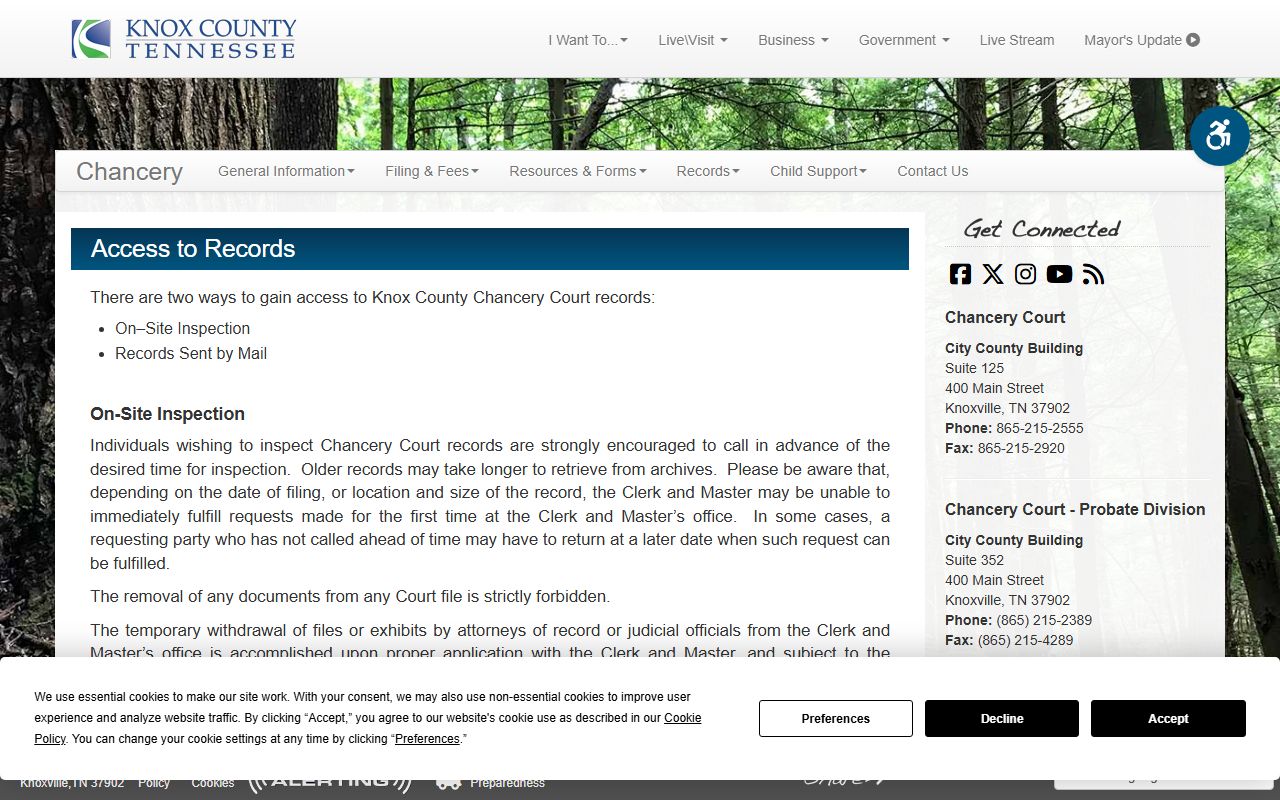
That guidance is a good reminder to call before you visit Knoxville for older Knox County Probate Court Records, especially if you want archived estate books or microfilmed files.
Note: Older Knox County probate court records may not be ready while you wait, so advance notice can save a second trip to the courthouse or archives.
Knox County Probate Court Records at the Archives
Not every probate record stays in the courthouse. The Knox County Archives page states that non-current county records are housed in the East Tennessee History Center, and it specifically lists probate records from 1789. That makes the archives a major stop for historical Knox County Probate Court Records, especially when your search moves beyond active estates and into genealogical or property history research.
The FamilySearch county page gives a strong roadmap for what survives in Knox County. It identifies a Wills and Estate Settlements Index covering 1792 to 1939, Administrators, Executors and Guardians records from 1792 to 1905, Estate Books from 1792 to 1863, and Insolvent Estates from 1859 to 1915. Those date spans help set expectations. If you need a will abstract, settlement entry, or estate book citation from the early county period, the archive is likely the better lead than the current courthouse vault.
Statewide resources can help before you travel. The Tennessee State Library and Archives is worth checking for microfilm and related probate holdings, and the Tennessee Probate Records overview at FamilySearch explains how county probate materials were kept across the state. For Knox County, those statewide tools work best as finding aids. They do not replace the local office that actually holds or controls the probate court record.
Knox County Probate Court Records and Estate Files
Knox County Probate Court Records can include much more than a single will. A full estate or guardianship file may contain the petition that opened the matter, the will and any codicils, letters testamentary or letters of administration, bond papers, inventories, appraisements, creditor claims, orders, receipts, accountings, and the final settlement. In Knox County, older material may appear as bound books, loose papers, or microfilm rather than a neat modern packet.
The general records information page for Knox County Chancery Court says recent case files are stored on-site in the Chancery Court vault, while older files are off-site and some are on microfilm. It also notes that records are available for inspection during regular business hours to Tennessee residents, that proof of identification may be required, and that sealed or confidential material is not open for public inspection. That matters for Knox County Probate Court Records because some probate-adjacent matters, such as confidential filings, will not be treated like open estate books.
Common document groups found in Knox County Probate Court Records include:
- Wills, codicils, and probate petitions
- Letters testamentary and letters of administration
- Estate inventories and appraisements
- Claims filed by creditors against an estate
- Annual and final accountings
- Guardianship and conservatorship papers
The Knox County probate records information page explains where recent files, archived records, and microfilm copies are kept before you request access.
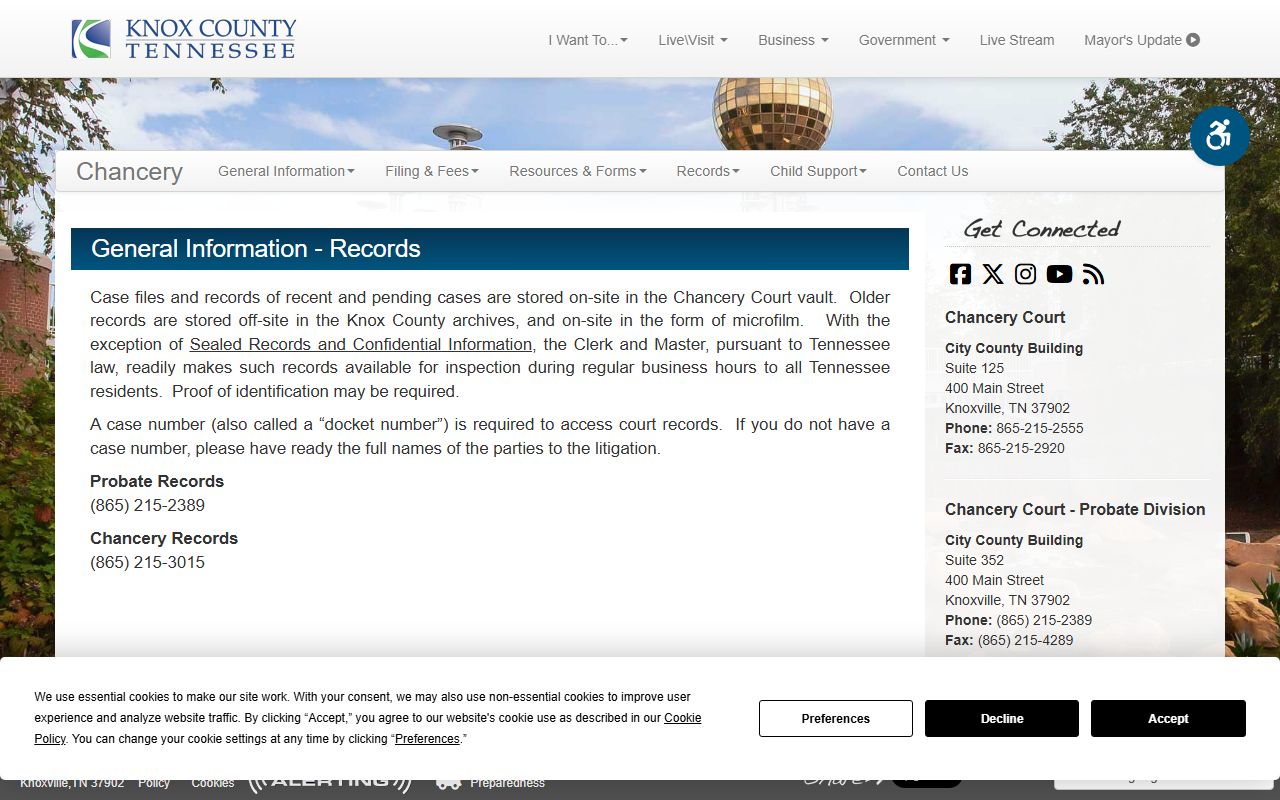
That storage split is why two probate searches in Knoxville can move at very different speeds even when both involve the same court.
Knox County Probate Court Records Under Tennessee Law
Knox County Probate Court Records are created under Tennessee probate law, even though the files are held locally in Knoxville. Tennessee's probate framework begins with Title 30, and the related rules in Title 31 and Title 32 shape what you see in a file when an estate turns on descent, distribution, or proof of a will. In practical terms, the local record reflects both the county clerking system and the statewide probate statutes that control notice, inventories, claims, and final settlement.
When a person dies with a will, Title 32 rules on execution and probate of wills help explain why Knox County files may include witness affidavits, will contests, or orders admitting a writing to probate. When there is no will, Title 31 on descent and distribution becomes more important because heirs and shares may drive the petition, notices, and final orders. That distinction often helps researchers decide whether to ask for a will book entry, an administration packet, or a full estate file.
Creditor notice is another place where the statutes show up inside the record. Tenn. Code Ann. §§ 30-2-301 and 30-2-302 govern notice to creditors, which is why many Knox County Probate Court Records include publication materials, affidavits, and clerk notations tied to estate administration. Tenn. Code Ann. §§ 30-2-306 and 30-2-307 address how claims are filed and when claims can be barred, so a claims docket, objection, or order on timeliness can be central to understanding what happened in an estate.
If you are using the file for research rather than litigation, the main value of these statutes is context. They help explain why a case contains bonds, accountings, receipts, notices, and deadline-driven creditor papers instead of only a will. For procedure and court access at the state level, the Tennessee courts website is the main statewide reference point. It complements Knox County Probate Court Records, but it does not replace the county file itself.
Note: Statutory citations help explain the record trail, but the Knox County file remains the controlling source for what was actually filed in a specific estate.
Getting Copies of Knox County Probate Court Records
If you need copies rather than a simple case check, start by deciding whether the file is likely recent or historical. Recent and pending probate matters are more likely to be in the Chancery Court vault. Older Knox County Probate Court Records may be in archive storage or on microfilm. The county's own guidance says to call in advance for older records, which is the best way to avoid asking for a file that has not yet been pulled from storage.
Mail requests are possible, but Knox County's instructions are strict. You must send payment by check or money order, not by credit card, and include a self-addressed envelope with enough postage. If you know the docket number, include it. If not, give the full names tied to the estate and the approximate filing year. Be clear about whether you need a will, a letters order, an inventory, or the whole file, because that helps the probate records office narrow the copy request.
Supplemental databases can sometimes help you identify the right date range before contacting Knoxville. The county FamilySearch page is often the best free starting point for older Knox County Probate Court Records, and the Ancestry Tennessee probate collection may help with index-level searching if you already subscribe. Those tools are useful for leads, but the official copy still comes from the county office or archives.
Knoxville and Knox County Probate Court Records
Knoxville is the county seat, so most people looking for Knox County Probate Court Records will end up using a Knoxville office even if the decedent lived elsewhere in the county. The courthouse is downtown at 400 Main Street, while the Knox County Archives are in the East Tennessee History Center. That local split is important. A courthouse visit may help with recent estates, but a historical search may turn into an archive trip instead.
Knoxville researchers often move between local and statewide sources. The county offices remain primary. Still, the Tennessee archives, FamilySearch guides, and court system materials can help you identify record types before you request copies. If you only know that a probate matter existed in Knox County, start with names, a date range, and the type of proceeding. That gives courthouse or archives staff in Knoxville a much better chance of locating the right probate court record.
Cities in Knox County
Knox County Probate Court Records still route through the county seat and county probate system, but these city pages give you location-specific context for residents who begin the search from different communities inside the county.
Use these city pages when you want local access notes that still point back to Knox County probate records.
Nearby County Searches
Knox County borders other Tennessee counties that can matter when an estate was filed near a county line, involved land in more than one county, or belongs in a neighboring probate venue instead. Use these adjoining county pages when the record trail moves outside Knox County.