
Find Gibson County Probate Court Records
Gibson County Probate Court Records searches usually start in Trenton, where the county seat and Gibson County Court anchor probate access for local estate work. The county was created in 1823 from Indian lands, and the County Clerk maintains records from 1823 with marriage and probate records from 1824. If you are looking for a will, estate settlement, guardianship file, or an older probate reference, begin with the county clerk and county court path, then use online case search tools and historical finding aids to narrow the date range before you request copies.
Gibson County Probate Court Records Quick Facts
Gibson County Probate Court Records Office
The Gibson County FamilySearch guide says the county was created in 1823 from Indian lands and notes that the County Clerk maintains records from 1823. The expanded notes also place marriage and probate records from 1824 in the clerk record stream. That makes Gibson County Probate Court Records a Trenton-centered search, even when a family story points to another community in the county. The county seat matters because the court and clerk path are the first places to confirm venue, file custody, and any historical record series that may still be available.
Tennessee public court records adds useful routing context because it lists Gibson County Circuit Court and Gibson County General Sessions in Trenton and notes that online case search is available. That site does not replace the county probate file, but it can help you confirm whether a related court matter is active, where the case is routed, and how the local court structure fits around Gibson County Probate Court Records.
| County Seat | Trenton |
|---|---|
| County Clerk | (731) 855-7615 |
| Record Coverage | County Clerk records from 1823, with marriage and probate records from 1824 |
| Probate Handling | Gibson County Court |
The practical starting point is simple. Call the county clerk, give the full name of the decedent, and ask whether the estate record is in an active file, a book index, or an older record set that may need archive or microfilm support before it can be copied.
Search Gibson County Probate Court Records
A focused Gibson County Probate Court Records request works better than a broad surname hunt. Probate can include a will, letters of administration, an inventory, an appraisement, a claims file, a settlement, or a guardianship matter. Those records may sit in separate books or series, so the easiest way to get useful results is to name the record type, give an estimated death year, and identify any book, page, or case clue already found. When the office knows exactly what you want, it can search less and verify more quickly.
Trenton case tools can help you narrow the work before you ask for copies. The Tennessee public court records site shows Gibson County Circuit Court and General Sessions in Trenton, with online case search available, which is useful for confirming a related court trail or finding a modern case reference. That does not mean every historic probate volume is online. It means the county search can start with a live case check and then move back to older Gibson County Probate Court Records once the basic venue question is settled.
Useful details to gather before requesting Gibson County Probate Court Records include:
- The decedent's full name and any alternate spelling
- An estimated death year or estate filing range
- The specific probate record type, such as will, bond, inventory, or settlement
- Any index hit, case number, book citation, or page reference already found
- A note confirming that the estate belongs in Gibson County rather than a neighboring county
That kind of request gives the clerk a concrete target. It also helps you avoid the common mistake of assuming one probate phrase covers every estate paper when the useful evidence may be in a bond, order book, or inventory entry instead of the will itself.
Note: A tight request tied to one estate and one date range is much easier to verify than a countywide search for every person with the same surname.
Gibson County Probate Court Records History
Gibson County Probate Court Records begin soon after the county's creation, which is important because early Tennessee county papers often preserve the first generations of family and property activity in a place. The county's 1823 origin from Indian lands also explains why early record work may need extra care. Families can appear in older land or tax material before a probate file is obvious, and some estates may need to be traced through the county seat and the first available clerk books rather than through a modern index alone.
The clerk's 1823 record start and the 1824 marriage and probate record note suggest that the local record trail was organized early. That matters because probate history is rarely one neat volume. It often includes county court minutes, bond books, will references, inventory papers, and estate settlements. Gibson County Probate Court Records should therefore be searched as overlapping record series, not as a single file type. A will entry may point to a bond, and a bond may point to a later settlement or claims entry.
Researchers should also expect uneven survival and indexing. Early material may be easier to find in book form than as loose papers, while later files may split across several record groups. If one search path fails, that does not necessarily mean the estate never existed. It may mean the record was indexed under a different series or copied into a separate clerk volume.
Gibson County Probate Court Records Online
The Tennessee courts portal gives the best state-level context for understanding the county court structure behind Gibson County Probate Court Records. It is not a substitute for the county file, but it helps you see how local court routing works before you ask for a specific estate volume or packet.
The Tennessee courts portal is the cleanest state-level starting point for Gibson County probate routing: Tennessee Courts.
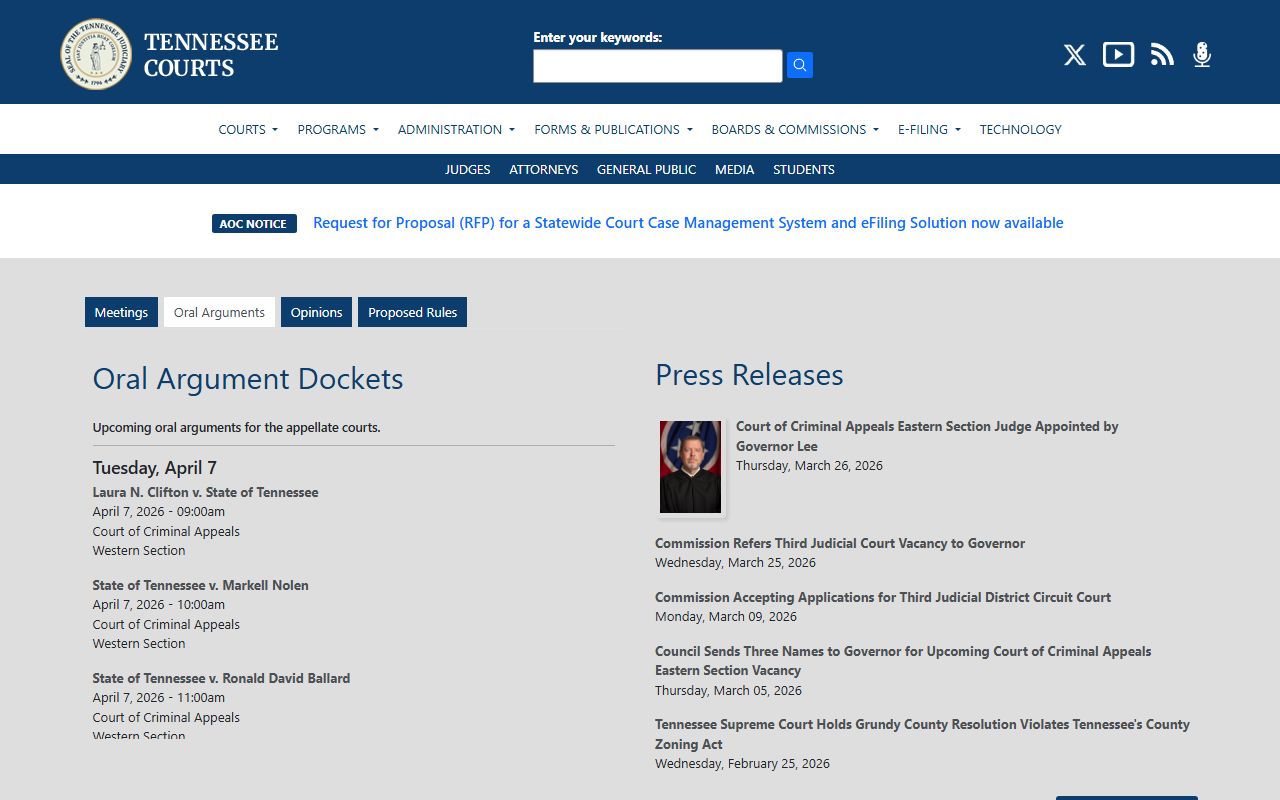
That statewide portal helps with court structure, while the local Gibson County Probate Court Records file in Trenton still controls the actual estate paper trail. The county-level case search through Tennessee public court records can also help you confirm current case activity before you move to older probate books or archived material.
The Tennessee State Library and Archives is the most useful state backstop when an older Gibson County probate volume is hard to inspect locally. TSLA can be especially helpful for county microfilm or for figuring out which historical book series should be requested first.
Note: Online tools are best used as finding aids. The county-held Gibson County Probate Court Records file is still the record that matters most when you need the complete estate trail.
Gibson County Probate Court Records Law
Gibson County Probate Court Records are created under Tennessee probate law, so the state code helps explain why an estate file may include more than a will. Title 30 frames estate administration, Title 31 covers descent and distribution, and Title 32 governs wills and probate of wills. Those titles explain why the county file can contain appointment papers, claims, inventories, settlements, and orders even when the original will is short or missing.
The creditor-notice portions of the code are especially relevant when reading Gibson County Probate Court Records. Section 30-2-301 and Section 30-2-302 help explain why a probate file may hold notice to creditors, publication proof, and related administration papers. If a record packet seems thicker than expected, that is often because the estate generated more court action than the will page alone suggests.
Legal context is most helpful when you are trying to distinguish between a simple index hit and a full estate record. It also helps explain why an apparently routine probate matter can still contain important evidence about heirs, debts, filing dates, and the order in which the estate moved through the court.
Gibson County Wills And Bonds
One of the most useful things about Gibson County Probate Court Records is that they preserve more than final settlement papers. Wills and bonds can identify administrators, executors, sureties, and heirs, even when the rest of the file is thin. Inventories may list land, livestock, tools, household goods, and debts. A claims file can show who believed the estate still owed money, while a settlement can confirm how the estate closed. Those layers make probate records a strong source for family reconstruction and local history.
Researchers should not stop once they find a single reference. A will book entry may be only the doorway into a larger record set. In Gibson County, the most productive searches often move from the will index to the bond, then to the inventory or settlement pages that show the estate in motion. If the will is missing, another probate record type may still confirm the same family and date.
Common record groups to ask about include:
- Wills and will books
- Administrators' and executors' bonds
- Inventories and appraisements
- Estate settlements and accounting records
- Claims, notices, and related court orders
That layered approach usually turns a thin lead into a fuller estate picture. It also helps explain why the probate trail may appear across more than one clerk series in Trenton.
Trenton Probate Routing
Trenton is the county seat, so Gibson County Probate Court Records should be routed there first when the estate belongs to Gibson County. That matters because probate venue is tied to the county that opened the estate, not just to the town family members remember. If a death notice, cemetery marker, or family story points to a place outside Trenton, the probate file still belongs in the county where the case was filed.
The online court search tools make this easier to manage. If you can confirm the modern case path first, you can then work backward into older estate books and historical references with less guessing. That is especially useful when you only know a surname, a rough death year, or a partial family memory. Start in Trenton, confirm the county record path, then move outward only if the estate was actually opened somewhere else.
Cities in Gibson County
Gibson County Probate Court Records serve the whole county, but the county seat remains the key probate access point. If you want another Tennessee city page for comparison, use the statewide city directory below.
Nearby County Searches
Gibson County borders other Tennessee counties that can matter when an estate was filed near a county line, involved land in more than one county, or belongs in a neighboring probate venue instead. Use these adjoining county pages when the record trail moves outside Gibson County.