
Search Carroll County Probate Court Records
Carroll County Probate Court Records usually start in Huntingdon, where the county clerk keeps the record series researchers use to locate wills, estate settlements, guardianship papers, and older court files. The county was created on November 7, 1821 from the Western District, so the probate trail begins early enough to matter for families who appear in the first decades of county life. If you know only a name, the most effective approach is to narrow the date range, identify the likely record type, and then move through the county series until the estate paper trail becomes clear.
Carroll County Probate Court Records Quick Facts
Carroll County Probate Court Records Office
The Carroll County FamilySearch guide says the county was created on November 7, 1821 from the Western District, and it lists the county clerk as the office maintaining probate records from 1821. That is the first practical anchor for Carroll County Probate Court Records. Huntingdon is the county seat, so even when a family story points to another community in the county, the record search still starts with the county office that handles probate custody and local request routing.
Carroll County government is the local source for county office context and the photograph used on this page. That matters because Carroll County Probate Court Records are not abstract statewide records. They are county records with a real courthouse setting, a county clerk, and a specific seat of government in Huntingdon where a researcher can begin the request process.
| County Seat | Huntingdon |
|---|---|
| Probate Court | Carroll County Court |
| Record Custody | County Clerk maintains probate records from 1821 |
| County Created | November 7, 1821, from the Western District |
The local office setting is important because it keeps a request focused on the right place. If you ask for Carroll County Probate Court Records without a date range or record type, the office has to guess whether you mean a will book, a later loose will packet, a guardian record, or a court case file. A tighter request saves time and usually gets a better answer.
Search Carroll County Probate Court Records
The best Carroll County Probate Court Records search starts with the exact series you need. Carroll County has a long probate trail, and the known record groups are spread across dates instead of sitting in one single volume. The county research points to Court Case Files, 1826-1900 with indexes from 1826-1900; Loose Wills, 1905-1949 with indexes from 1852-1949; Settlements in Estates of Deceased Persons, 1842-1923; Will Books, 1822-1864; Wills, 1822-1948; Inventories to Estates, 1852-1899; and Administrators', Executors' and Guardians' Records, 1852-1901. Those ranges show why one surname can surface in several places.
That spread also changes how you should ask for help. If you know the decedent died before mid-century, begin with wills and settlements. If the estate is later, ask whether the loose wills or indexed case files are the better starting point. If you are tracking a guardian or administrator rather than a will, say that directly. Carroll County Probate Court Records respond better to a request that names the series than to one that asks for every possible probate item attached to a surname.
Before contacting the county office, gather the following details so the search can be narrowed quickly:
- Full name of the decedent or ward, including variant spellings if known
- Approximate death year or the probate filing range
- The record type you need, such as a will, inventory, settlement, guardianship entry, or court case file
- Any book number, index note, or family clue from another source
The Tennessee courts system is a useful statewide reference when you want to understand probate access, but the actual Carroll County Probate Court Records still live in county custody and should be requested through the Huntingdon path first.
Carroll County Probate Court Records Series
Carroll County probate work is easier to understand when the records are treated as a set of related series rather than one broad file. The will books begin early, and the later loose wills and court case files show that the county kept building a more detailed probate trail over time. That matters for researchers who need proof of relationships, property, debt claims, or guardianship activity rather than just a final will statement.
FamilySearch's Tennessee probate guide is helpful because it explains how Tennessee probate materials are often arranged by county and record type. That is exactly how Carroll County Probate Court Records should be approached. The county name gets you to the right jurisdiction, but the series name gets you to the right book, packet, or index. Once you know the likely series, it becomes much easier to ask for a copy or to confirm whether the record is on site, indexed, or stored elsewhere.
For Carroll County, the most useful series to keep in view are:
- Will Books, 1822-1864
- Wills, 1822-1948
- Court Case Files, 1826-1900
- Indexes to Court Case Files, 1826-1900
- Settlements in Estates of Deceased Persons, 1842-1923
- Inventories to Estates, 1852-1899
- Administrators', Executors' and Guardians' Records, 1852-1901
- Loose Wills, 1905-1949
- Indexes to Loose Wills, 1852-1949
Those series show a full probate path. A will might name heirs, a settlement might show how the estate was closed, and a guardianship record might explain why a minor was placed under court oversight. Carroll County Probate Court Records often become more useful when they are read together instead of as isolated entries.
Carroll County Wills And Estate Books
Wills and estate books are the backbone of early Carroll County Probate Court Records. The will books begin in 1822, which is very close to county creation, so researchers working with early families have a real chance of finding first-generation material. That early coverage is especially important when a death occurred before civil registration or when a family line is being traced through property transfers, heir names, or witnesses listed in the will itself.
The later records are just as important. Loose wills from 1905 to 1949 and their indexes from 1852 to 1949 show that the county kept probate access moving forward even as file formats changed. A loose will may be accompanied by appointments, receipts, affidavits, and settlement items that were not copied into a bound volume. For Carroll County Probate Court Records, that means the bound book and the loose paper file can both matter, depending on the year and the kind of proof you need.
When a will search does not produce a quick answer, do not stop there. A probate trail may still show up in a settlement book, an inventory series, or an index entry that points to a packet or later loose file. The county's date ranges suggest that many estates were recorded more than once, and those duplicate traces can help confirm that you have the right person.
Carroll County Probate Court Records Image
The Carroll County government site provides the local photo used here and gives a visual cue for the clerk setting where Carroll County Probate Court Records research begins.
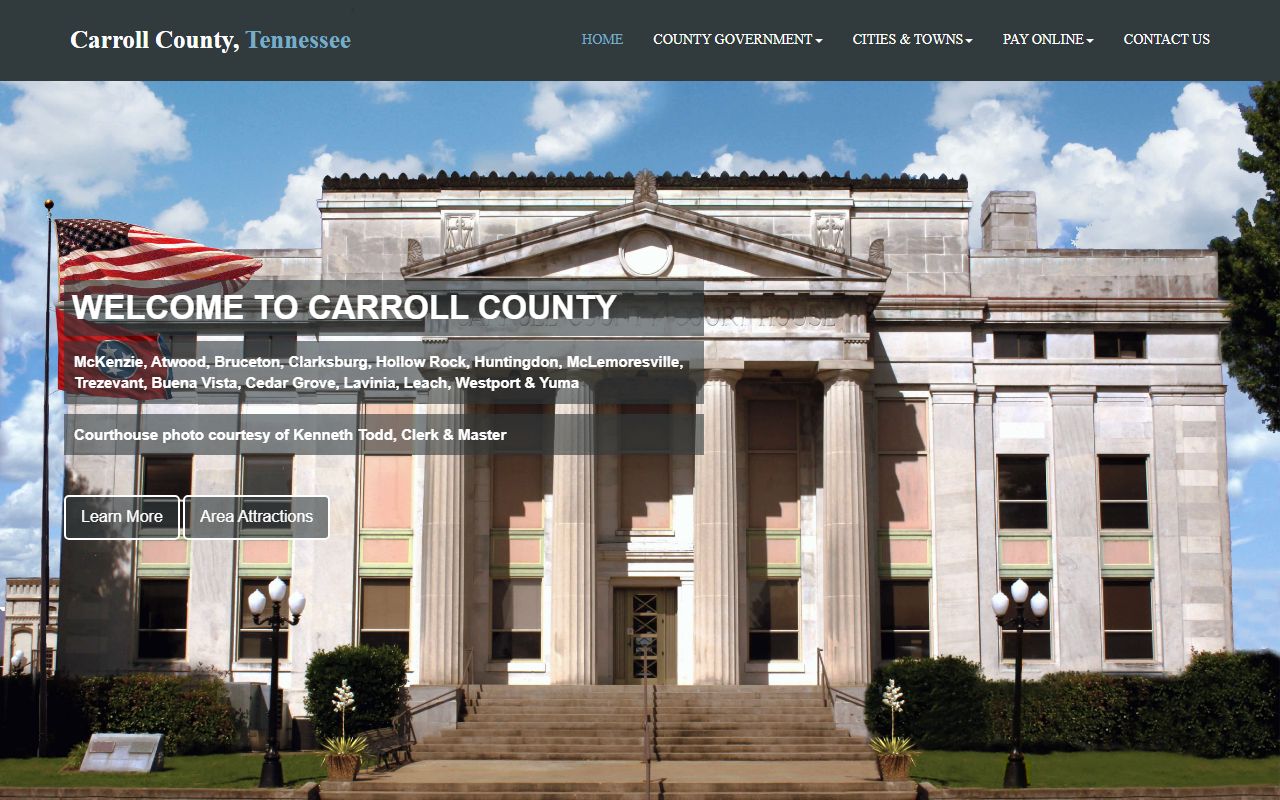
The image helps connect the online search to Huntingdon, which is still the practical starting point for requests, verification, and follow-up questions about county probate material.
That local context matters because county probate work is often a matter of matching the right series to the right office. A clear photo of the clerk setting is a reminder that Carroll County Probate Court Records are accessed through a real county process, not a statewide search result page.
Carroll County Probate Court Records Law
Carroll County Probate Court Records are governed by Tennessee probate law, which explains why estate files can contain more than a will. Title 30 covers administration of estates, Title 31 covers descent and distribution, and Title 32 covers wills. Those titles explain the legal structure behind the record series you see in Carroll County, including appointments, inventories, settlements, and final distributions.
The filing and notice process also shows up in the file structure. Section 30-2-301 helps explain why inventories appear after a representative qualifies, and Section 30-2-302 helps explain why those inventories are recorded. Section 30-2-306 and Section 30-2-307 help explain creditor notice and claims, which is why a probate packet may include publication proof, claim filings, and objections instead of only a will page.
If you are working through an older Carroll County matter, Tennessee law is useful context, but the county record itself is still the best proof of what was filed, when it was filed, and which heirs, creditors, or guardians were involved.
Cities in Carroll County
Carroll County Probate Court Records serve the whole county, but the county seat remains the key probate access point. If you want another Tennessee city page for comparison, use the statewide city directory below.
Nearby County Searches
Carroll County borders other Tennessee counties that can matter when an estate was filed near a county line, involved land in more than one county, or belongs in a neighboring probate venue instead. Use these adjoining county pages when the record trail moves outside Carroll County.