
Find Scott County Probate Court Records
Scott County Probate Court Records matter when you need a will, estate settlement, guardianship paper, or administration file tied to Huntsville or another Scott County community. The county seat is Huntsville, and the Scott County Court is the local probate court reference point for searching older estate material. Because Scott County was created in 1849 from Anderson, Campbell, Fentress, and Morgan counties, an early death or estate may belong in one of those parent counties instead. Start with the full name, the best year range, and the record type you want, then move from county custody to preserved guides and filmed records.
Scott County Probate Court Records Office
The Scott County FamilySearch guide says the county was created in 1849 from Anderson, Campbell, Fentress, and Morgan counties, and it notes that the County Clerk maintains records from 1849. That is the first local clue to keep in mind when you search Scott County Probate Court Records in Huntsville. The record run begins with county formation, but the marriage and probate note in the expanded clerk material starts at 1850, so early research should check both years instead of assuming the catalog line and the surviving books use the same start date.
The expanded clerk note also gives the office phone as (423) 663-2588. That is the right number when you need to ask whether a Scott County Probate Court Records item is in a bound book, a historical index, or a preserved settlement series. FamilySearch also points to Executors', Administrators', Guardians' Settlements of Accounts in Estates of Deceased Persons, 1892-1903 and 1917-1938, which is a useful later record run for estate work that extends beyond the first county books.
| County Seat | Huntsville |
|---|---|
| Probate Court | Scott County Court |
| County Created | 1849 from Anderson, Campbell, Fentress, and Morgan counties |
| County Clerk Records | Maintains records from 1849; marriage and probate records noted from 1850 |
| County Clerk Phone | (423) 663-2588 |
Huntsville is the practical starting point for Scott County Probate Court Records because it is the county seat and the place where local probate questions get routed first. If a family story names a smaller place inside the county, keep the request centered on Scott County and the probate series that fits the year. That keeps the search tied to the office that actually holds the county record.
Note: For deaths before 1849, the parent counties are the right place to check first, not Huntsville.
Search Scott County Probate Court Records
A focused Scott County Probate Court Records request works better than a broad surname hunt. Probate can cover a will, an administrator appointment, a guardian matter, a bond, an inventory, a settlement, or a claim against an estate. Those items sit in the same family of records, but they are not interchangeable. If you ask for the wrong series, the clerk has to guess which book or packet you mean. That slows the search and weakens the result.
The strongest request names the decedent, gives an estimated filing year, and identifies the exact record type. If you already know the estate opened in Huntsville, say so. If you only know the person lived somewhere in Scott County, say that too. The county office can then decide whether the record is likely in an older book, a later settlement volume, or a copied historical file. FamilySearch's Scott County guide makes the later settlement trail easier to spot, especially for the 1892-1903 and 1917-1938 accounts series.
When a family line reaches back before county formation, use the parent county first. When it falls inside the county years, stay with Scott County and ask for the probate series that fits the date. That simple split saves time, because an estate record from the 1850s is handled very differently from a settlement packet from the early twentieth century.
Scott County Probate Court Records History
Scott County did not exist until 1849. That single fact shapes every early probate search. The county was carved from Anderson, Campbell, Fentress, and Morgan counties, so the earliest family and estate trail often lives in one of those older jurisdictions. If a person died before the county was created, the record cannot be in Scott County because Scott County was not yet a court district. That is why the county history matters before you start paging through books.
The county seat at Huntsville gives the local search a clear home, but the first year of the county still matters more than the town name. Once Scott County exists, the probate trail stays local unless there is a reason to cross a county line. For a post-1849 estate, the county clerk and Scott County Court are the right start. For a pre-1849 estate, the search should move back into one of the parent counties and then forward again if the family later appears in Scott County records.
That boundary check is the main history lesson for Scott County Probate Court Records. It keeps you from missing the right file by asking the wrong county.
Note: County formation year is the fastest way to rule in or rule out Scott County for an early estate.
Scott County Probate Court Records Sources
FamilySearch's Scott County page is the first research stop because it ties the county formation date to the local clerk note and points to the later settlement run. That makes it easier to tell whether you are dealing with a first-generation estate book or a later account book. It also gives the best broad clue that Scott County Probate Court Records should be searched with a county-year mindset, not just a surname mindset.
The Tennessee State Library and Archives provides the other major preservation layer. The Scott County microfilm guide helps show how county records were preserved, while the Scott County Records 1849-1989 PDF gives a broader road map to surviving material. Those guides are useful when you want to know whether the file should still be at the courthouse, has been filmed, or needs a historical reference before staff can locate it.
Used together, the FamilySearch entry and the TSLA guides help you move from a general question to a real record trail. That matters in a county where the early years begin with formation in 1849 and the probate work moves through several eras of custody and preservation.
Note: If the first office answer is vague, TSLA guides can help you narrow the book range before you ask again.
Scott County Probate Court Records Law
Scott County Probate Court Records sit inside Tennessee probate law, so the state code helps explain the shape of the file. Title 30 covers administration of estates, while Tennessee's rules on descent, distribution, and wills explain how heirs, property, and probate filings are handled. Those rules explain why one estate file may hold a will, while another holds appointment papers, inventories, notices, claims, and a final settlement instead of one neat record.
That legal structure matters in Huntsville because a probate packet is usually a sequence, not a single page. The opening filing shows who was named to handle the estate. Later papers show what property existed, who claimed an interest, and how the court closed the matter. Once you read the record with that in mind, the Scott County Probate Court Records trail becomes much easier to follow.
State law does not replace the county file. It gives the county file its shape, which helps you understand why one search result leads to another and why a clean estate answer may be spread across several books or packets.
Scott Probate Image Guide
The official Tennessee Courts portal at tncourts.gov gives the statewide court context behind Scott County probate work. It is a useful lead-in when you are trying to place a county record inside the larger Tennessee court system.
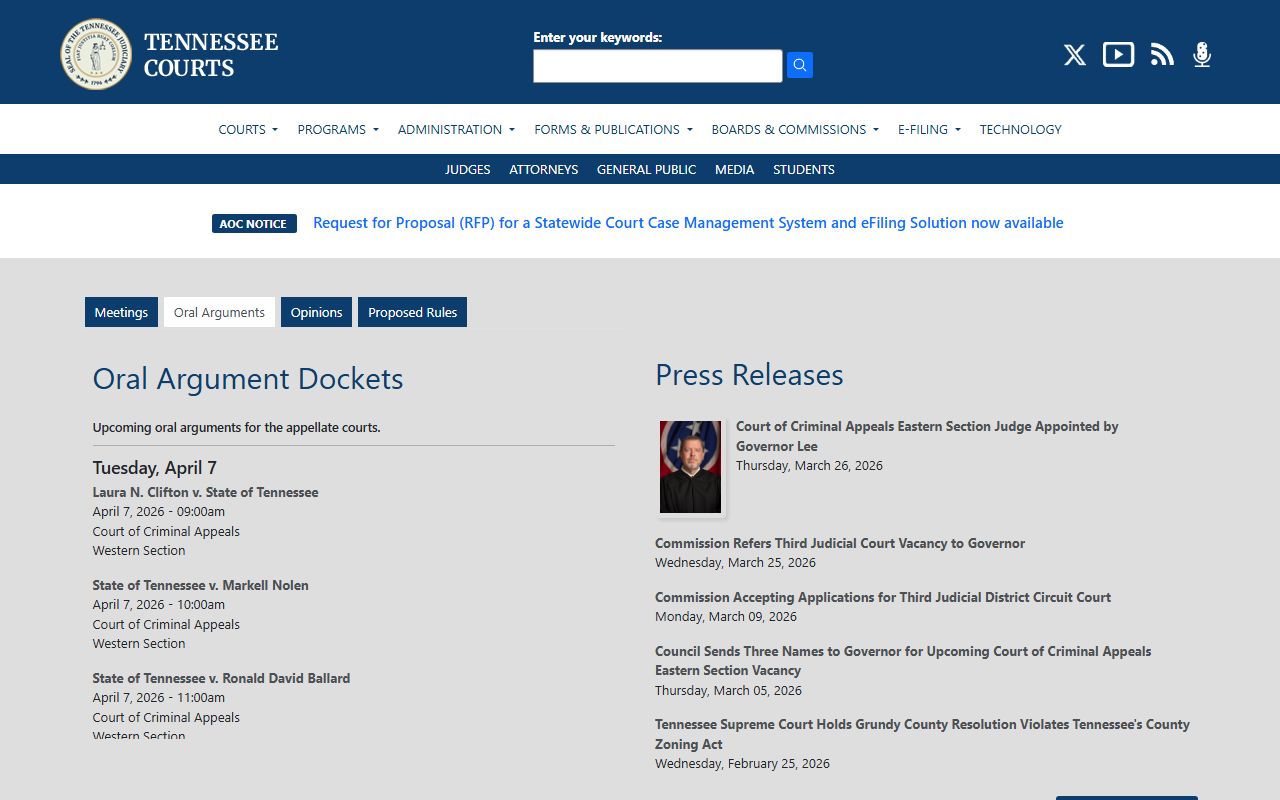
That image is a reminder that the county record is the target. State portals, county guides, and historical indexes help you aim the search, but the Huntsville file is what answers the estate question.
Cities in Scott County
Scott County Probate Court Records serve the whole county, but the county seat remains the key probate access point. If you want another Tennessee city page for comparison, use the statewide city directory below.
Nearby County Searches
Scott County borders other Tennessee counties that can matter when an estate was filed near a county line, involved land in more than one county, or belongs in a neighboring probate venue instead. Use these adjoining county pages when the record trail moves outside Scott County.