
Search Bradley County Probate Court Records
Bradley County Probate Court Records are the key local source for wills, estate files, court minutes, settlements, and guardian matters tied to Cleveland and the rest of the county. A strong search begins with the county seat because probate in Bradley County is handled through Bradley County Court, with records routed through county clerk channels and older material shifting into archive and microfilm research. This page explains where Bradley County Probate Court Records start, what record series survive, and how to move from a name and date to a more useful local request.
Bradley County Probate Court Records Office
FamilySearch's Bradley County guide says Bradley County was created on May 2, 1836, from Indian lands and places probate records with the County Clerk from 1836 forward. It also identifies Bradley County Court as the probate forum. That matters because Bradley County Probate Court Records are county records first, even when a family story starts with a Cleveland address, a church burial, or land in a smaller community. The probate trail comes back to the county seat and the local offices there.
Bradley County government places the County Clerk at 155 N Ocoee Street, Cleveland, TN 37311, and lists the main phone number as 423-728-7221. The county site also states that probate records begin in 1836, marriage records begin in 1836, land records are handled by the Register of Deeds, and historical records are kept at the county archives. That split is useful. Recent Bradley County Probate Court Records may start with the clerk, while older wills and estate books may require archive or state-level support.
| County Seat | Cleveland |
|---|---|
| Probate Court | Bradley County Court |
| County Clerk | 155 N Ocoee Street, Cleveland, TN 37311 423-728-7221 |
| Probate Records Begin | 1836 |
| Historical Access | County archives and Tennessee State Library and Archives microfilm support |
Knowing that office structure helps keep requests focused. Probate is not the same as land recording, but estate work can still overlap with deeds when heirs later transfer property. Bradley County Probate Court Records often answer the family and appointment questions first, then land books help confirm what happened next.
Search Bradley County Probate Court Records
The best Bradley County Probate Court Records search is narrow and record-specific. Bradley County has several probate series with different date spans, so it helps to decide whether you need a will, a court minute entry, an executor bond, a guardianship record, or a settlement in a deceased person's estate. Cleveland is the practical hub for all of those searches because it is the county seat and the place where county clerk access, court routing, and historical preservation all meet.
Before requesting Bradley County Probate Court Records, gather:
- The full name of the decedent, ward, or estate, with possible spelling variants
- An estimated death year or filing range
- The record type needed, such as a will, bond, court minute, settlement, or guardian paper
- Any clue from an index, transcription, or prior family research
- A note that the estate should route through Bradley County rather than a city office
The Tennessee probate overview at FamilySearch is helpful when you need statewide context on how will books, loose papers, and probate minutes were commonly kept. Ancestry's Tennessee wills and probate collection can also act as a finding aid for Bradley County by surfacing a name, date, or volume clue before you contact the local office. Those tools are useful for discovery, but the controlling Bradley County Probate Court Records copy still comes from the county record trail.
Note: A short request for one named series and one date range usually works better than asking for every probate paper connected to a surname.
Historic Bradley County Probate Court Records
Bradley County has a solid probate timeline, but it is not one continuous book. The FamilySearch county guide identifies court minutes from 1838 through 1900, wills and will indexes, wills from 1859 through 1905, settlements in estates of deceased persons from 1865 through 1908, bonds and letters of administrators, executors, and guardians from 1871 through 1931, inheritance taxes and minutes from 1897 through 1906, and insolvent estates of deceased persons from 1889 through 1947. Those ranges are important because Bradley County Probate Court Records survive in separate series that reflect different steps in estate administration.
That division affects how a search should be framed. A will may prove that a decedent left instructions, but it may not show who qualified to act or how the estate closed. Bonds and letters help identify the appointed representative. Court minutes can show orders that are not obvious from a single will page. Settlements, inheritance tax records, and insolvent estate files can reveal what happened after probate opened. When Bradley County Probate Court Records are treated as a layered set of books and papers, the county's date ranges make much more sense.
TSLA's Bradley County microfilm listing adds another level of support because it points researchers toward the state's preserved microfilm path for county material. That matters when an older estate is easier to trace through a microfilmed volume than through a modern clerk counter search. The county archives remain part of the local picture, but the state inventory gives Bradley County Probate Court Records a stronger backup route when the search turns historical.
Bradley County Probate Court Records in Cleveland
Cleveland is the county seat, so it is the working center for Bradley County Probate Court Records. That is true even when the decedent lived outside the city. Probate venue follows the county record system, not the mailing address a family happens to remember. For that reason, Cleveland should be treated as the hub for current office contact, older archive leads, and the courthouse context needed to sort one estate from another.
The Tennessee Courts portal helps explain the statewide court structure that sits behind local probate handling before you narrow the search to Bradley County Court in Cleveland.
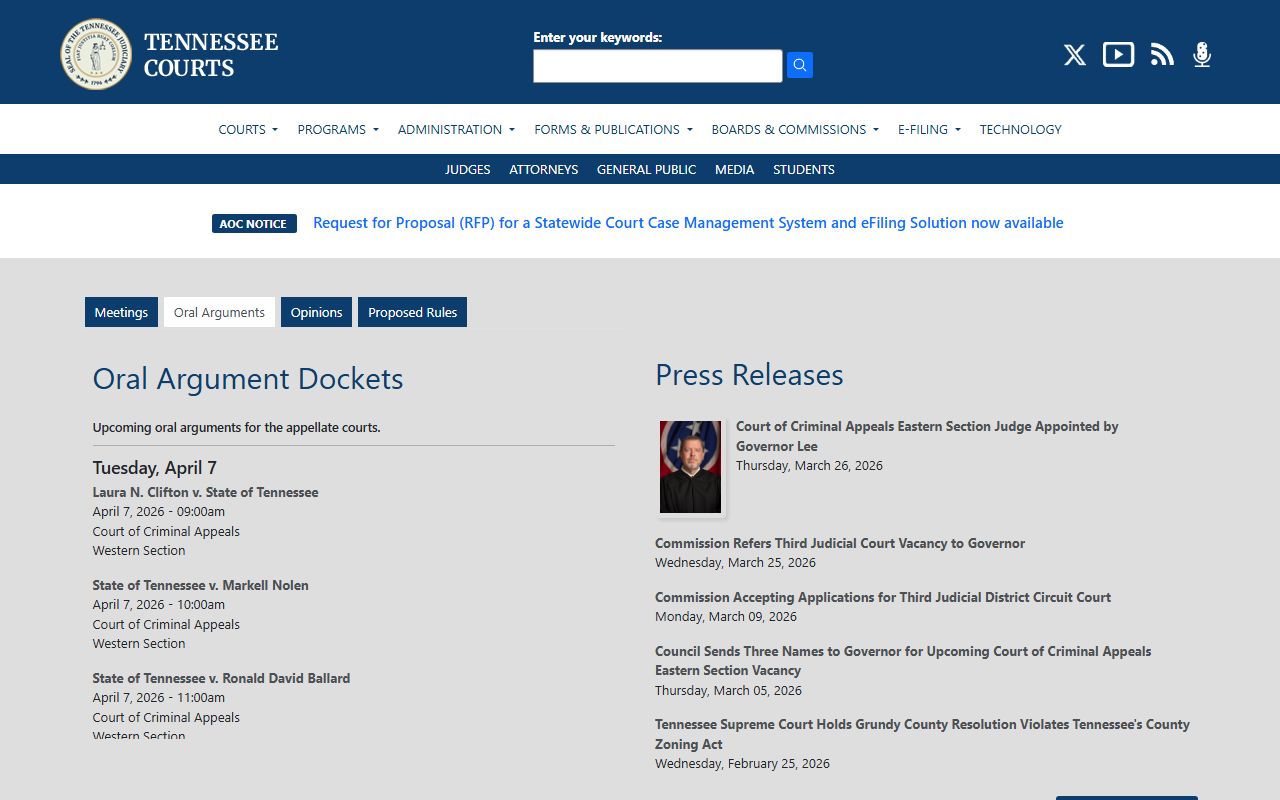
That state-level view is useful, but the actual Bradley County Probate Court Records request still depends on the Cleveland office path and the county record series tied to that estate.
Bradley County government also notes that historical records are at the county archives. That gives Cleveland two roles at once. It is both the county seat for current probate routing and the starting point for older record preservation. When a search begins with little more than a name and an approximate year, keeping the Cleveland focus clear can prevent wasted time with unrelated offices.
Note: Cleveland is the access hub for Bradley County probate work, but the records remain county records rather than city records.
Bradley County Wills and Estate Files
Wills are only one part of Bradley County Probate Court Records. The county research points to wills and will indexes, court minutes, bonds and letters, settlements, inheritance tax records, and insolvent estates. Together, those records can show who filed the estate, who received authority to act, what debts or taxes appeared, and how the matter reached settlement. That broader view matters because a short will abstract rarely tells the whole story by itself.
The same is true for guardian matters. FamilySearch specifically lists bonds and letters of administrators, executors, and guardians from 1871 through 1931. That means Bradley County Probate Court Records can also help when the research question involves minors, protected property, or the administration of an estate where a guardian had a role. If a will exists but does not answer the real question, the better next step is often to move into the related bond, letter, or settlement series rather than stop with the will book.
Bradley County's inheritance tax and insolvent estate series add another layer. Those records can help explain estates that were contested by debt, shaped by tax filings, or tracked after the initial probate order. In practical terms, Bradley County Probate Court Records work best when the searcher expects more than one useful paper and is willing to move across the related series.
Bradley County Probate Court Records and Law
Local probate files are shaped by statewide probate law. Title 30 provides the basic structure for estate administration. Title 31 helps explain descent and distribution when there is no will. Title 32 addresses wills and the probate of wills. Those titles help explain why Bradley County Probate Court Records often include more than a single will page. An estate can also generate appointment papers, inventories, notices, claims, settlements, and closing entries.
The same pattern appears in the Tennessee code sections that often shape the paper trail. Tenn. Code Ann. §§ 30-2-301 and 30-2-302 help explain why creditor notice and related administration steps show up after an estate opens. Tenn. Code Ann. §§ 30-2-306 and 30-2-307 help explain the filing and barring of claims, which is why a Bradley County estate file may contain notice proof, claims, objections, and dated court action before it can close. Reading Bradley County Probate Court Records with those sections in mind makes the record groups easier to understand.
The law section is most useful as context, not as a substitute. State law explains the process, but the filed county record shows what actually happened in one estate. That is why Bradley County Probate Court Records remain the core source when the goal is to confirm heirs, appointments, or the sequence of probate events.
Get Bradley County Probate Court Records
When you need Bradley County Probate Court Records, start by deciding whether the estate is recent, historical, or only partly identified. For current or later matters, the County Clerk in Cleveland is the first local contact point because the county site identifies probate records there from 1836 forward. For older matters, the county archives and the Tennessee State Library and Archives become more important because the county site points to archive holdings and the TSLA microfilm inventory confirms a state preservation path.
A good request matches the record type. Ask for a will if you have a will clue. Ask for bonds and letters if the goal is to prove appointment of an executor, administrator, or guardian. Ask for court minutes or settlement records if the estate's later steps matter more than the opening filing. Bradley County Probate Court Records are easier to retrieve when the request matches the way the county kept the series in the first place.
This is also where the county and state sources work together. The county site tells you where to start in Cleveland. The FamilySearch county guide tells you which Bradley series exist and when. TSLA's microfilm support helps when the estate falls into an older bound volume or archive-centered search. Taken together, those sources let a searcher move from a broad family question to a focused probate request without losing the county-specific details.
Note: If the first search fails, try a second request built around a different Bradley County probate series rather than assuming the estate left no record.
Cities in Bradley County
Bradley County Probate Court Records still route through the county seat and county probate system, but these city pages give you location-specific context for residents who begin the search from different communities inside the county.
Use these city pages when you want local access notes that still point back to Bradley County probate records.
Nearby County Searches
Bradley County borders other Tennessee counties that can matter when an estate was filed near a county line, involved land in more than one county, or belongs in a neighboring probate venue instead. Use these adjoining county pages when the record trail moves outside Bradley County.